If 6 Was 9 by The Jimi Hendrix Experience Lyrics Meaning – Dissecting the Counterculture Anthem
Lyrics
If the sun refuse to shine
I don’t mind, I don’t mind
If the mountains fell in the sea
let it be, it ain’t me
Alright, ‘cos I got my own world to look through
And I ain’t gonna copy you
Now if 6 turned out to be 9
I don’t mind, I don’t mind
Alright, if all the hippies cut off all their hair
I don’t care, I don’t care
Dig, ‘cos I got my own world to live through
And I ain’t gonna copy you
White collared conservative flashing down the street
Pointing their plastic finger at me
They’re hoping soon my kind will drop and die
But I’m gonna wave my freak flag high, high
Wave on, wave on
Fall mountains, just don’t fall on me
Go ahead on Mr. Business man, you can’t dress like me
Sing on Brother, play on drummer
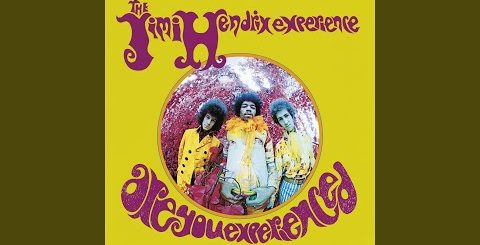
The late 1960s were rife with upheaval, a time when music not only served as a backdrop for social change but also as its clarion call. Within this swirling mix of ideas and ideals, Jimi Hendrix emerged not just as a groundbreaking guitarist but as an articulate poet for a generation questioning the status quo. ‘If 6 Was 9,’ a track from the group’s seminal 1967 album ‘Axis: Bold As Love,’ encapsulates the spirit of that era with its blend of bluesy riffs and defiant lyrics.
The song is something of a countercultural manifesto—a declaration of self-expression against societal pressure and conformity. But to truly grasp the track’s resonance and what it tells us about the era’s consciousness, one must dig deeper into its poetic nuances, rich imagery, and unyielding attitude that defied mainstream norms and articulated the feelings of a generation poised on the brink of revolution.
Shaking Foundations: When Mountains Fall and Seas Swell
Hendrix’s opening verse sets the stage with vivid, apocalyptic imagery. The falling of mountains and the sea engulfing the earth serve as potent metaphors for cataclysmic change. Yet despite the potential chaos, there’s an unwavering resolve—’I don’t mind, I don’t mind.’ It’s an acknowledgment of the inevitability of change and the futility of resistance. The emphasis on personal introspection over external concern reflects a quintessential aspect of the 1960s’ philosophy—turning inward to find truth.
The line ‘I got my own world to look through’ speaks volumes about individual perception. In an era defined by collective movements, Hendrix reminds us of the individual’s unique lens, the personal reality that is crafted and inhabited by one’s own beliefs and desires. In doing so, he places individual liberty at the core of his message, a value that resonated with many of his contemporaries.
Distorted Numbers: The Defiance of Normativity
Hendrix’s contemplation of the hypothetical—’If 6 turned out to be 9’—is a direct challenge to the rigidity of societal norms. It’s a playful yet profound rebellion against the world of binaries and absolutes. By stating ‘I don’t mind,’ Hendrix is effectively saying that he would not be affected by such a shift in perception or reality, as his sense of self is not hinged on the collective agreement of what is or isn’t.
This lyric can be understood as a radical acceptance of fluidity in all aspects of existence, including gender, culture, and countercultural movements themselves. Whereas for some, stability is defined by certainty, Hendrix’s words propose that true harmony comes from one’s ability to adapt and thrive in the face of the undefined and the unfamiliar.
The Iconic Freak Flag: Hendrix’s Banner of Rebellion
Perhaps the most enduring image from ‘If 6 Was 9’ is the ‘freak flag’ Hendrix pledges to wave high. This flag becomes a symbol of pride, diversity, and resistance to homogeneity. The ‘freak’ in Hendrix’s context is a person who dares to stand out, to embrace their uniqueness in the face of a society that relentlessly tries to sand down rough edges unto uniformity.
By boldly claiming that he’s going to wave his freak flag high, Hendrix asserts a refusal to be ashamed or subdued. In the culture of the ’60s, ‘freak’ was a label that mainstream society often used derogatorily against those who stepped out of line. Hendrix and others like him reappropriated it as a term of strength and honor.
Critique of Conservatism: A Dig at the Corporate Machine
The ‘white-collared conservative’ in the song is a straightforward representation of the status quo and those who defend it. These individuals are portrayed as mechanical and removed from reality, pointing their ‘plastic finger’ at Hendrix and those like him, hoping for their cultural extinction. The specificity of this character paints a clear ‘us versus them’ scenario, defining the boundaries between the establishment and the counterculture.
However, Hendrix responds to this disdain not with anger or aggression but with a sort of pitiful amusement that underlines the ignorance of these judgmental onlookers. His words elevate the idea of self-expression and tolerance above the narrow-minded views of the corporate and conservative elements that wish to maintain a restrictive social order.
The Quintessential Lyrical Quotables: Hendrix’s Enduring Words
Jimi Hendrix’s ‘If 6 Was 9’ is not merely a song; it’s a collection of aphorisms for an age of ideological conflict. Lines like ‘Go ahead on Mr. Businessman, you can’t dress like me’ encapsulate a widespread dissatisfaction with materialism and the false sense of freedom that commerce promises but rarely delivers.
The song brims with memorable lines that challenge social conventions, calling out the superficiality of appearance and the freedom of choice. Hendrix’s call to ‘Sing on Brother, play on drummer’ is a rallying cry for creative and spiritual continuity amidst the chaos, encouraging fellow artists and thinkers to persevere. Each lyric serves a dual purpose—poetic in form and revolutionary in function, becoming mantras for a generation in the throes of transformative change.