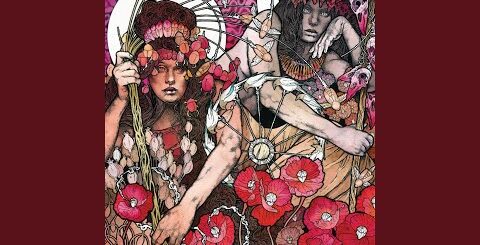
Isak by Baroness Lyrics Meaning – Unearthing the Resonance of a Metal Lullaby
Lyrics
Hands in the ground
Buried traces of sound scream
Hem in the seed
Water to salt
Salt into rain
Isak
Tender the swine
Carry the hare and the barrow home
In the realm of sludgy riffs and haunting melodies, Baroness has carved out a unique niche. Their song ‘Isak,’ from the acclaimed ‘Red Album,’ stands as a mystifying chapter in their discography. The track – with its cryptic lyrics and brooding ambiance – invites listeners into a contemplative journey that dances along the shadowy borders of metal and art-rock.
While at first glance the song appears shrouded in obscurity, delving into the composition reveals layers of meaning that mirror the complexity of human experience. From the visceral imagery to the underlying narratives of transformation, ‘Isak’ is a sonic tapestry woven with threads of myth, nature, and introspection.
The Ethereal Echoes of Our Existence
‘Hands in the ground, Buried traces of sound scream’ – from the opening lines, ‘Isak’ transports its audience straight to the heart of a bleak and barren landscape. The very essence of these lyrics suggests a connection to something primal, something rooted in the earth itself. It’s a nod to our ancestral lineage, where the hands that toil the soil are as much a part of us as the voiceless history they seek.
This opening serves as a powerful metaphor for the way humanity interacts with its past: we are constantly burying and unearthing the sounds of our history – both personal and collective. The ‘scream’ that follows is that moment of epiphany, the unspoken anguish and joy that come with understanding our place within the larger tapestry of time.
A Journey Through Elemental Metamorphosis
‘Hem in the seed, Water to salt, Salt into rain’ – Baroness isn’t just constructing sentences; they’re crafting a narrative of transformation. Elemental transmutation unfolds with a poetic grace that calls to mind alchemical processes. From the nurturing of potential within a seed to the cycle of water turning into salt and back to rain, Baroness illustrates the never-ending change that defines the physical world we inhabit.
The symbolism here is rich and varied, arguably touching on themes of growth, decay, and rebirth. Just as the elements shift forms, so too do we evolve through our own life experiences. These lines prompt listeners to reflect on their individual metamorphoses and the universal cycles connecting us to every living thing.
Tending to the Beasts Within
In the act of ‘Tender the swine,’ there appears to be a deliberate contrast between the caring actions of tending and the commonly held perceptions of swine as unclean or base creatures. This juxtaposition may be introducing a discourse on embracing and nurturing the less glamorous aspects of ourselves – our flaws, fears, and failures.
Baroness could be suggesting that these elements, which society often deems undesirable, are integral to our humanity and deserve attention and empathy. ‘Isak’ in this sense is not only a name but a symbol, perhaps representing every individual’s inner beast that must be met with compassion and understanding, not scorn.
Mystery Engulfs the Final Image of ‘The Barrow Home’
The song concludes cryptically with ‘Carry the hare and the barrow home.’ A ‘barrow’ – a term stained with ancient connotations – could be interpreted as a burial mound, a wheelbarrow, or simply a heavy burden to bear. It buoys the theory that ‘Isak’ may be an ode to cycles; the hare often symbolizes fertility and rebirth, juxtaposed with ‘the barrow,’ an emblem of death or endings.
This potent contradiction creates a lasting image of movement and progress. Yet it raises more questions than it answers. Are we being invited to bring our most fundamental experiences – those of life and death – unflinchingly back into our homes, our intimate spaces? The song leaves these interpretations dangling, tantalizingly out of reach.
Unraveling the Veil of ‘Isak’s’ Hidden Meaning
Amidst the dense imagery and the band’s characteristic melancholic soundscapes, the hidden meaning of ‘Isak’ continues to evade one-sided interpretations. It thrives within its own ambiguity, challenging the listener to find personal significance within the lyrical Rorschach test laid out before them.
Perhaps, at its core, ‘Isak’ is ultimately about the connectivity of life—the visceral, the spiritual, and the cyclical nature of existence. It could be a calling to appreciate the present by understanding the inextricable link between beginnings and endings, and the sacred beauty that lies within the process of ongoing transformation.