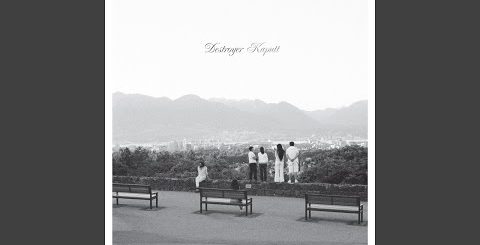
Kaputt by Destroyer Lyrics Meaning – Unraveling the Sonic Dreamscape of Identity and Illusion
Lyrics
Chasing some girls
Alright, chasing cocaine
Through the backrooms of the world
All night
Wasting your days
Chasing some girls
Alright, chasing cocaine
Through the backrooms of the world
All night
Sounds, smash hits
Melody maker, NME
All sound like a dream to me
All sound like a dream to me
All sounds like a dream
Sounds, smash hits
Melody maker, NME
All sound like a dream to me
All sound like a dream to me
All sounds like a dream
Step out of your toga
And into the fog
You are a prince on the ocean
In a pinch
In the sky
In your eye
Step out of your toga
And into the ocean
Look, they got your prince
On the fall
In a pinch
In the sky
In your eye
In the sky
In your eye
In a pinch
In the sky
In your eye
I wrote a song for America
Who knew?
I wrote a song for America
Who knew?
Who knew?
Within the intricate framework of ‘Kaputt,’ a standout track from the eponymous album by Destroyer, lies a melodic blend of nostalgia and critique. The song interlaces an elegiac tone with cutting commentary, enveloped in the bittersweet embrace of soft-rock instrumentation reminiscent of a bygone era. Parsing the duality of dream against the starkness of reality, ‘Kaputt’ invites listeners to disentangle its succession of surreal imagery and hazy recollections.
Dan Bejar, the Canadian indie rock maestro behind Destroyer, weaves language as if crafting a tapestry that reveals different patterns upon each inspection. As with much of Bejar’s work, ‘Kaputt’ sidesteps conventional narrative for a collage of emotions, cultural references, and existential musings. Delving into this track, we find ourselves peeling back the layers of a song that is as much an introspective journey as it is a commentary on the fragile veneer of the zeitgeist.
An Elegy to Entertainment: When Nostalgia Meets Detachment
‘Sounds, smash hits, Melody maker, NME’—these relics of music journalism echo through ‘Kaputt’ as ghostly reminders of an era where print was king and critics could make or break an artist’s career. Destroyer’s invocation of these iconic publications serves as an homage, but when described as ‘all sound like a dream to me,’ these words also betray a sense of distance and unreal quality, suggesting that the prior cultural landscape is no longer tangible or real.
Bejar’s intonation throughout the song drips with an almost mournful quality, acknowledging the irretrievable nature of the past. It’s a siren song for fleeting glory, and a wistful yearning for a time when music could define, divide, and unify, and when the written word had the power to canonize the ephemeral nature of sound itself.
Cocaine and the Cacophony of Lost Innocence
The repeated lines about chasing girls and cocaine, set against the ‘backrooms of the world,’ paint a picture of futile pursuit and excess. ‘Kaputt’ uses this motif to emphasize the hollowness of hedonism—a cycle of desire leading only to more desire, never to fulfillment. In a sense, these pursuits are Destroyer’s metaphor for the larger human condition, wherein the night is never-ending, and satisfaction is constantly deferred.
Cocaine, as a trope, becomes shorthand for the quick highs and dizzying lows of fame, love, and success. It’s also a reflection on the music industry itself—a space legendary for both its creative geniuses and its darker, more destructive escapades. So when Bejar sings these lines, there’s an awareness of the myth and the reality of the rock star lifestyle, and in this dichotomy, ‘Kaputt’ finds its biting edge.
Stepping Out of Your Toga: Symbols of Transition and Transcendence
The entreaty to ‘Step out of your toga and into the fog’ is a sibilant whisper of transformation. From security to uncertainty, from the visible to the opaque, Destroyer articulates a moment of leaving behind one’s former self. The toga, an icon of classical antiquity, symbolizes the old guards of culture and wisdom, now challenged by the inescapable and impermeable fog of modernity.
Furthermore, the toga is a garment worn in public, for the eyes of society, while fog represents the unknown — personal, internal landscapes that are navigated alone. In ‘Kaputt,’ these symbols encourage the listener to consider the roles we play publicly and the selves we become when shrouded in the mist of our private contemplations and undisclosed desires.
Singing for a Nation: The Troubadour’s Reflection
Amidst the flurry of potent imagery in ‘Kaputt’ lies a seemingly simple yet charged statement: ‘I wrote a song for America.’ Here, Bejar aligns himself with the long line of artists attempting to capture the essence or spirit of a time and place. Being a Canadian artist looking southward, there is an inherent outsider perspective, a stance that allows for a deconstruction of American ideals and identity without parochial bias.
Moreover, with the questioning repetition of ‘Who knew?’, there is a humble admission of the unpredictability of art’s impact. The troubadour, at once hopeful and uncertain, asks if their messages will resonate or fade into the static. In that refrain, ‘Kaputt’ both declares its offering to the cultural canon and admits to the mercurial winds that carry a song into the hearts or the obscurity of its audience.
Deconstructing Dreams: The Hidden Meaning of Kaputt
Beyond the literal lyrical exploration, ‘Kaputt’ exhales a deeper exhale of meaning, examining the complex interplay between dream and reality. What first appears to be a set of disjointed musings coalesces into a narrative about the fragile, fractal nature of our dreams—cultural, personal, and collective. Destroyer invites the listener into a soundscape where the line between aspiration and actuality blurs, and where melodies fold upon themselves, revealing an unsettling yet captivating truth.
This dive into the song’s dream-world contends with illusions — the ones we build for ourselves and the ones crafted by the zeitgeist. Bejar’s casual delivery belies the song’s urgent inquiry into the authenticity of our narratives, identities, and the stories we tell ourselves to keep the chaos at bay. ‘Kaputt’ is less an answer and more an enigmatic puzzle box, carved with musical precision and lyrical ambiguity, beckoning the listener to find their own meaning amidst its captivating enigma.