Kid A by Radiohead Lyrics Meaning – Decrypting the Enigmatic Anthem of an Era
Lyrics
I slipped on a little white lie
We’ve got heads on sticks
We’ve got ventriloquists
We’ve got heads on sticks
We’ve got ventriloquists
Standing in the shadows at the end of my bed
Standing in the shadows at the end of my bed
Standing in the shadows at the end of my bed
Standing in the shadows at the end of my bed
The rats and the children follow me out of town
The rats and the children follow me out of town
Come on kids
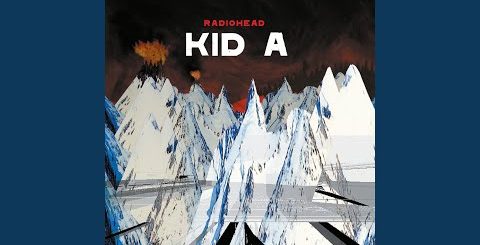
In the year 2000, Radiohead released their enigmatic track ‘Kid A,’ a title that shared its name with the album it graced. The song, nestled within a record that has garnered critical acclaim and a cult following, remains one of the band’s most mysterious and discussed creations. ‘Kid A’ confronts listeners with a landscape of electronic sounds, abstract lyrics, and a mood that oscillates between the serene and the unsettling.
The title track of Radiohead’s fourth studio album, ‘Kid A,’ is pregnant with a meaning that seems to hover just beyond the grasp of its audience. It’s a song that resists the easy satisfaction of a single interpretation, instead leading its listeners down a rabbit hole of speculation. But what lies beneath the icy electronic surface of this track? Let’s wade through the whispered lyrics and ambient sounds to try and touch the core of Radiohead’s ‘Kid A.’
Slipping Through the Veil: Surrealism and Dissociation
The opening line ‘I slip away’ sets the tone for ‘Kid A,’ suggesting an escape or a transformation that is both enigmatic and intangible. The act of slipping away could refer to so many things—a break from reality, a shift in identity, or the subtleties of deceit as referenced by the ambiguous ‘little white lie.’ But what does it mean to slip away in the context of this song? Is it liberation or self-deception?
The surreal imagery woven throughout the lyrics, from ‘heads on sticks’ to ‘ventriloquists,’ could portray a dream-like state or a distortion of the human form, a theme that reflects the psychological fragmentation hinted at by Thom Yorke’s plaintive delivery. The music, with its undulating synths and skittering beats, marries the sense of unease that the lyrics conjure, fusing to create an atmosphere thick with otherworldliness.
Lurking in the Limelight: The Song’s Hidden Meaning
Much of the intrigue of ‘Kid A’ comes from its opacity. ‘Standing in the shadows at the end of my bed’ repeats like a mantra or a vision, conjuring an image that could be both protective and menacing. It’s this duality that invites listeners to project their own fears, anxieties, or protectors onto the figure in the shadows. In the broader context of the digitally-obsessed album, this presence could signify the duality of technology—as both a guardian of modernity and a predator lurking in the unseen corners of our lives.
Yet, the line ‘the rats and the children follow me out of town’ suddenly shifts perspective, casting the speaker as the pied piper in this unsettling narrative. The merging of rats and children as followers suggests a theme of innocence led astray or perhaps the idea that society deems certain truths to be as undesirable as vermin. Are we listening to the confessions of a disillusioned leader or the summoning voice of change beckoning the next generation?
Behind the Sonic Curtain: Decoding the Musicology
The very fabric of ‘Kid A’ is stitched with a complexity that goes beyond its cryptic lyrics. The experimentation with electronic and ambient elements paints a stark contrast to traditional rock instrumentation, turning the song into an avant-garde tapestry. With rhythm patterns that flirt with irregularity and elegance, Radiohead subverts pop sensibilities, creating an uneasy listen that challenges the status quo of music at the turn of the millennium.
Entangled within this auditory web are influences from electronic pioneers like Aphex Twin and the sprawling canvases of jazz musicians such as Charles Mingus—artists known for their lack of compromise in expression. Similarly, ‘Kid A’ exists as a part of Radiohead’s refusal to bow to commercial expectations, carving a niche for itself as an uncompromising artistic statement.
Beyond The Ventriloquist’s Dummies: A Gaze into Society
The imagery of ‘heads on sticks’ alongside ‘ventriloquists’ in ‘Kid A’ pulls us into a macabre theater where authenticity and manipulation are at play. The ventriloquist, in particular, becomes a metaphor for the mechanisms of societal control—individuals or entities that give voice to doctrines and ideologies without speaking a word of personal truth. It’s a subtle nod to the artifice and performance that pervade modern life.
As these ventriloquists orchestrate from the darkness, they could be stand-ins for the media, government, or the music industry itself, complicit in displaying sanitized versions of reality—a theme that remains chillingly relevant in today’s landscape of fake news and alternative facts. Radiohead taps into a deep-seated suspicion of the ‘other,’ whoever or whatever that may represent, and invites a reflection on the authenticity of our perceived world.
Memorable Lines That Echo in the Heart of Radiohead’s Canon
Radiohead has a penchant for embedding lines within their music that linger long after the song ends—’Kid A’ is no exception. Lines like ‘Standing in the shadows at the end of my bed’ tap into a universal fear and curiosity about the unknown. These words, simple on the surface, gain potency when delivered through Yorke’s falsetto, delicate as it edges against the backdrop of spectral synths.
Meanwhile, the phrase ‘Come on kids’ tugs with an eerie innocence, a coaxing call that leads the song to its unresolved conclusion. Disquieting yet charismatic, these words beckon listeners into the song’s strange universe while leaving them at the threshold—ready to step over but unsure of what they’ll find. Each replay becomes an attempt to unravel the song’s meaning, ensuring ‘Kid A’ sustains its place as a riddle wrapped in a mystery inside an enigma.