Knives Out by Radiohead Lyrics Meaning – Dissecting the Haunting Ballad of Existential Despair
Lyrics
He’s not coming back
Look into my mouth
I’m not coming back
So knives out
Cut him up
Don’t look down
Shove it in your mouth
If you’d been a dog
They would have drowned you at birth
Look into my mouth
It’s the only way you’ll know I’m telling the truth
So knives out
Cut him up
Squash his head
Put him in the pot
I want you to know
He’s not coming back
His blood is frozen
Still there is no point letting it go to waste
So knives out
Catch the mouse
Squash his head
Put him in the pot
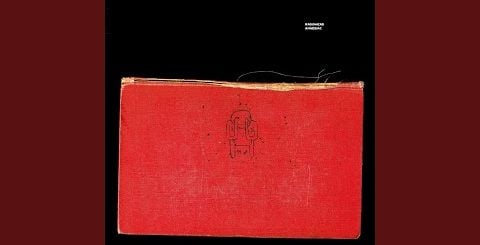
When Radiohead released ‘Knives Out,’ it quickly became evident that the track was more than just a meandering melody; it was an intricate tapestry of existential grief and stark reflection. The haunting track from their fifth studio album, ‘Amnesiac,’ melded melancholic guitar riffs with lyrics that seemed to delve into the depths of human experience.
Much like peering through a kaleidoscope of complex emotions, ‘Knives Out’ captures the essence of despair and the often-unspoken darkness that can reside within. The nuanced themes and raw introspection invite listeners to dissect its lyrical composition, uncovering layers of meaning that resonate on a deeply personal level.
A Vivisection of the Human Psyche
Radiohead has a reputation for crafting songs that cut through superficiality, and ‘Knives Out’ is no exception. The song’s title itself commands an immediate, visceral image—a command for the listeners to lay bare their innermost thoughts and confront their darkest realities. It’s as though the blades are out, ready to perform a psychological autopsy on the living.
As Thom Yorke’s compelling voice repeats the refrain, he invites an exploration of trauma and loss that is both literal and metaphorical. The process of cutting ‘him’ up suggests a dismembering of the past and the aspects of self that might be too painful to acknowledge. Yet, it’s in this surrender to the scalpel where one finds truth.
Dystopian Lullaby: The Song’s Bleak Narrative
In this chilling stanza, there’s an apocalyptic whisper. The harshness of ‘If you’d been a dog, they would have drowned you at birth’ echoes societal discard of the unwanted, manifesting as a nightmarish lullaby. It rings with the grim understanding of life’s cruelty—an awareness that Radiohead so expertly crafts into melodic form.
‘Knives Out’ in this light becomes an anthem for the overlooked and the smothered—those silenced before they had a chance to bark or sing. This juxtaposition of innocence (birth) with brutality (drowning) uses vivid imagery to thrust listeners into the uneasy space between existence and negation.
Deciphering the Cryptic: The Song’s Hidden Meaning
To unearth the song’s covert messages is to walk through a maze of Thom Yorke’s consciousness. There is an urgency to the lyrics, a sense of life’s fleeting nature, as symbolized by the mouse in ‘Catch the mouse, squash his head, put him in the pot.’ The rodent’s presence is transient, its purpose seemingly to be captured and disposed of, much like moments in our lives.
The hidden meaning resides within this cycle of capture and demise—it speaks to the futility of resistance and the inexorable nature of death. Here, the ‘pot’ could be a metaphor for the culmination of existence, a vessel where life is ultimately collected and transformed.
Through the Mouth of Madness: Memorable Lines
‘Look into my mouth, it’s the only way you’ll know I’m telling the truth.’ This haunting directive serves as a profound turning point in the song. It urges a confrontation with a reality that can only be appreciated in its raw, visceral state, as if to say that only in accepting the brutal nature of truth can one be freed from illusions.
These lines linger in the memory for their stark juxtaposition between intimacy (the mouth) and foreboding (the truth). Radiohead doesn’t shy away from exposing the unsettling nature of human honesty, where sometimes the only place for truth is within the jaws that can also lie or bite.
A Reflection on Mortality and Waste
Yorke’s line, ‘His blood is frozen, still there is no point letting it go to waste,’ feels like a cold meditation on mortality. It reflects a philosophy that even in death, there is utility—nothing should be wasted, not even the blood of the deceased. This can be seen as a commentary on how society often values individuals: only in terms of their usefulness.
Beneath the chilling verse lies an invitation to ponder life’s worth post-mortem. The phrase challenges listeners to consider the legacy one leaves behind and the sometimes-harrowing desire to hold onto what is inevitably lost to time—whether that be a loved one, a part of ourselves, or the fleeting nature of existence itself.