Last Night at the Jetty by Panda Bear Lyrics Analysis – Unpacking the Dreamlike Ruminations
Lyrics
Did we have them anyway?
Seems that we once had
Now we’ll have them all the time
Didn’t we have a good time?
I know we had a real time now
Who could say we’re not just as we were?
No one could deny
My, my I know
I don’t want to describe something that I’m not
I don’t want to hide the hopes that I have
I want to enjoy what’s meant to enjoy
Not try to find slights and slurs to employ
Say what you will
I’ve a pretty sound mind to go
I know I could not go
Even if I had the eyes to try
You have your ways
I have my ways
We have our ways
And I’ll call you my friend
And I’ll call you my dream that I once had
Did I have it, anyway?
Seems that I once had
Now I’ll have them all the time
Didn’t I have a good time?
I know I had a real time now
Who could I say I’m not just as I was?
No one could deny
My, my
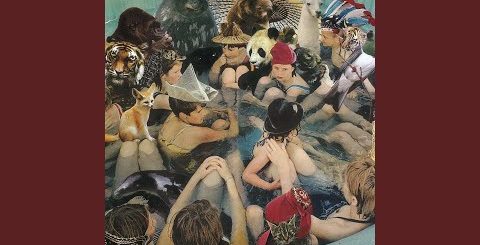
Panda Bear’s ‘Last Night at the Jetty,’ a track from the album ‘Tomboy’, spirals through a haze of introspection and memory, deciphering the shifting sands of time through the lens of dreamy pop psychedelia. Its looping melodies and textured harmonies invite listeners into a labyrinth of contemplation, reflecting on the passage of time and the ephemeral nature of experiences.
As the track oscillates between past recollections and present realities, Panda Bear (Noah Lennox) crafts a space where nostalgia intertwines with presence, coaxing us to consider the authenticity of our memories and the pursuit of happiness. This deep dive ventures beneath the surface of ‘Last Night at the Jetty,’ examining its lyrical intricacies and provoking a dialogue with our own fleeting histories.
The Question of Authentic Memory
The opening lines, ‘Dreams that we once had, Did we have them anyway?’ set the tone for a song that grapples with the reliability of memory. Panda Bear toys with the listener’s grasp of the past as he probes the legitimacy of our dreams and desires. The ethereal soundscape he creates befits the lyrical ambiguity, leaving us to wonder what is dream and what is reality.
These questions are not meant to confuse, but to challenge the narrative we construct about our lives. Memories take on a dreamlike quality, blurring the lines between lived experiences and the stories we tell ourselves. The song functions as a mirror held up to our inner mythologies, asking us to discern truth from the comforting fictions we may cling to.
The Pursuit of Unadulterated Joy
‘I don’t want to describe something that I’m not, I don’t want to hide the hopes that I have’, sings Panda Bear, drawing a line in the sand between reality and pretense. As he expresses a longing to genuinely enjoy life’s offer without the need for deception or discontent, the listener is invited to shed the layers of false narratives.
The simplicity of wanting to enjoy things for what they are resonates universally. It is a call to live intentionally and with authenticity, spurning the seduction of misrepresentation and the trap of focusing on perceived negative details.
A Melancholy Reflection on Time’s Flight
The haunting refrain of ‘Didn’t we have a good time? I know we had a real time now’ casts a backward glance while grounding us in the present. These evocative lines speak to the core of human experience—the passage of time and its unyielding progression. The repetition of past tense against the assurance of the ‘real time now’ etches a deep longing for the fleeting moments we so desperately wish to hold onto.
This inherent melancholy is not one of despair but rather recognition and acceptance. By acknowledging the irreversible flow of time, Panda Bear conveys a serene, if slightly rueful, understanding of the temporal nature of joy and companionship.
Comradeship and Identity in the Face of Change
‘You have your ways, I have my ways, We have our ways, And I’ll call you my friend’, is a testament to the individual and collective paths we traverse. In an ever-changing world, relationships become both an anchor and a testament to our personal evolution. The acknowledgment of differences and yet a willingness to bridge them reflects an enduring bond.
By referring to a shared history, Panda Bear encapsulates the complex narrative of identity—shaped by ourselves and the company we keep. Relationships, just as memories, are a confluence of intertwining paths, and the commitment to friendship is a statement of the values retained despite the constancy of change.
The Hazy Corridor of Dreams and Reality
The song’s resolution, repeating the beginning but from a singular perspective, ‘And I’ll call you my dream that I once had’, evokes the cyclical and transient nature of our experiences. Dreams are both a repository for our desires and a bridge to our waking life, and this line blurs the difference, emphasizing the dream’s inherent value regardless of its reality.
As such, ‘Last Night at the Jetty’ stands as a musically cloaked rumination on existence, nudging listeners to embrace the mutable nature of life. Through Panda Bear’s lens, dreams are as tangible as any experience, and perhaps it’s within this liminal space that we find the most profound sense of self.