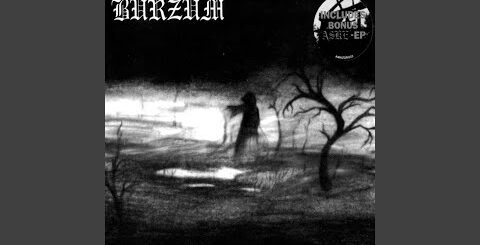
Lost Wisdom by Burzum Lyrics Meaning – Unveiling the Esoteric Echoes in Metal
Lyrics
Our world – our reality
To be that is – is but one
Manifestation of the essence
Other planes lie beyond the reach
Of normal sense and common roads
But they are no less real
Than what we see or touch or feel
Denied by the blind church
‘Cause these are not the words of God
The same God that burnt the
Knowing
In the realms of black metal, few names resonate with the tumultuous echoes of controversy and darkness quite like Burzum. One track that stands as a testament to the project’s enigmatic allure is ‘Lost Wisdom.’ Within its brooding melodies and harrowing screams lies a labyrinth of meaning, a complex tapestry woven from the fibers of the metaphysical and the mundane.
Grasping the significance of ‘Lost Wisdom’ is akin to fathoming the depths of a murky, bottomless ocean. The song does not yield its treasures readily; it demands that the listener dive headlong into its churning waters. Let’s plunge into the profound darkness that Burzum casts over us, teasing apart the dense narrative threads one by one.
A Glimpse Beyond the Veil: Decoding Existential Echoes
‘Lost Wisdom’ is not merely a composition of wrathful noise — it is the sound of enlightenment clawing at the edges of human perception. The song heralds the idea that our world, our so-called reality, is but a mere fraction of the greater essence that stretches beyond the limitations of our senses.
By invoking metaphysical prowess, Burzum propels us into an exploration of planes beyond common perception — spiritual realms, alternate dimensions, or perhaps deeper levels of consciousness. This otherworldly trek is not for the faint of heart; it’s for those who dare question, ‘What lies beyond the tactile world we cling to so desperately?’
Challenging the Dogma: A Rebellious Symphony
The song pointedly criticizes the ‘blind church,’ a metaphor for institutions that deny knowledge and truth. The ‘words of God,’ as claimed by these powers, seem to act as shackles upon the wisdom that once burnt bright within humanity — a wisdom ancient, arcane, and now seemingly lost.
In the throes of its chilling verses, ‘Lost Wisdom’ stands not only as a revolt against religious orthodoxy but also as a battle cry for intellectual and spiritual freedom. Burzum becomes both the arsonist setting ablaze the constraints of doctrine and the heretic that revels in the flames of forbidden knowledge.
The Lament of the Knowing: A Cry That Resonates Through Time
The notion of ‘the Knowing’ suggests an elite, a coterie of beings that once held profound insights into the truth of existence. What Burzum may be mourning in these lines is the loss of that ancient knowledge, a sacred connection to the cosmos systematically eradicated or concealed over the aeons.
The song alludes to a perpetual historical struggle – the extinguishing of the illuminating fires of gnosis by the cold, unyielding waters of ignorance. The context here cuts deep, engaging us in a soulful dirge for the collective amnesia humanity has come to suffer.
Memorable Lines: The Siren Call of Lost Lore
‘These are not the words of God,’ becomes a pivotal chorus in the song, a persistent refrain that encapsulates the spirit of ‘Lost Wisdom.’ These six words capture the irony of the divine and the human, how the ultimate truths could be so easily dismissed under the guise of spiritual righteousness.
Each repetition of the phrase is an invocation, a summoning of the outcast truths back into the light. It is as if the song itself is a ritualistic chant meant to awaken the slumbering wisdom that humankind has turned its back on.
Unearthing the Hidden Meaning: A Metaphor for Modern Malaise
To dissect ‘Lost Wisdom’ is to reveal its relevance beyond the occult and the arcane. Perhaps, what Burzum has so artfully delivered is not just a tale of otherworldly knowledge but a reflection of contemporary society’s disconnection from authenticity and depth.
In this light, the song becomes a mournful observation of our times — an era where the superficial reigns supreme, and the deep, abiding wisdom of old is lost amidst the noise of modernity. The pursuit of lost wisdom, as Burzum suggests, may very well be the quest to reclaim our own forsaken souls.