Make Up by Lou Reed Lyrics Meaning – Unveiling the Iconic Anthem of Self-Expression
Lyrics
And then you open up your eyes
Then comes pancake factor number one
Eyeliner, rose hips and lip gloss, such fun
You’re a slick little girl, you’re a slick little girl
Rouge and coloring, incense and ice
Perfume and kisses, oh it’s all so nice
You’re a slick little girl, you’re a slick little girl
Now we’re coming out, out of our closets
Out on the streets, yeah, we’re coming out
When you’re in bed it’s so wonderful
It’d be so nice to fall in love
When you get dressed I really get my fill
People say that it’s impossible
Gowns lovely made out of lace
And all the things that you do to your face
You’re a slick little girl, you’re a slick little girl
Eyeliner, whitener then color the eyes
Yellow and green, oh what a surprise
You’re a slick little girl, oh, you’re such a slick little girl
Now we’re coming out, out of our closets
Out on the streets, yes, we’re coming out
Yeah, we’re coming out
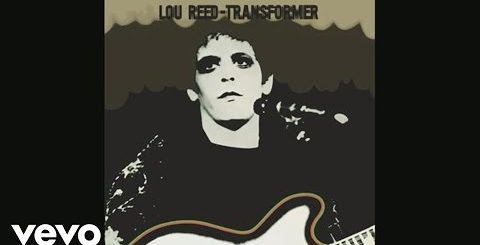
Lou Reed’s ‘Make Up’ stands as a profound elegy to self-expression, an ode to the transformational power of beauty and identity. A track from his 1972 album ‘Transformer’, produced by David Bowie and Mick Ronson, it’s an exposition of gender fluidity and the art of ‘coming out’ – both literally and metaphorically. Reed’s poetics navigate not just the surface application of cosmetics, but delve into a much deeper, subtextual dialogue on liberation and authenticity.
Against a backdrop of societal norms and the zeitgeist of the early ’70s, ‘Make Up’ emerges not merely as a song discussing cosmetics and change, but rather as a nuanced narrative championing the freedom to be one’s true self. The song captures a pivotal moment in the zeitgeist of its time, mirroring the struggles and eventual triumphs of the LGBTQ+ community, a powerful invitation to decode the aesthetics and the identity politics betwixt the lines.
The Duality of the Sleeping Face: Sublimity and Concealment
Reed opens the song with an acknowledgement of the unguarded and ‘sublime’ sleeping face, a state free from artifice. It sets the stage for a paradox that weaves throughout the song: the contradiction between natural beauty and the adorned, ‘awake’ version of ourselves that we present to the world. This contrast underpins a fundamental discussion about authenticity and the personas we adopt.
The imagery of opening one’s eyes is not just about waking up, but about an awakening – a realization and recognition of self that might diverge from societal expectations. There is a lingering sense that to face the world, one must ‘make up’ not only their face but their identity, a potent metaphor for the LGBTQ+ experience of preparing an ‘acceptable’ facade for society’s eyes.
Make Up as Armor: The Beauty in Preparedness
Verse by verse, Reed enumerates the cosmetics that transform the face, symbolizing the preparation for facing the outside world. In his recitation, there is a cadence of ritual, an almost ceremonial significance to the act of applying make-up. It’s a preparation for battle, a way of armoring oneself against the judgments and expectations of the outside world.
Beyond mere aesthetics, Reed portrays make-up as an empowering tool – a means of seizing control over one’s self-presentation and, by extension, over the perception of others. The listing of cosmetics becomes a mantra of empowerment, an assertion of identity and self that resonates particularly with the trans and broader LGBTQ+ communities.
The Transformative ‘Coming Out’: From Closets to Streets
At the core of ‘Make Up’ is the poignant refrain ‘Now we’re coming out, out of our closets / Out on the streets, yeah, we’re coming out.’ It’s here that Reed’s message crescendos into a euphoric declaration of self-acceptance and visibility. The closet, long a metaphor for secrecy and repression within the LGBTQ+ community, is flung open, and the streets become a canvas for the true self.
The song transcends its era, capturing the universal experience of emerging from hiding into authenticity. Reed’s repeated celebration of ‘coming out’ is not only a nod to the liberation of the LGBTQ+ community but a timeless rallying cry for anyone hiding their true selves from the world’s scrutiny.
Falling in Love with Self before Others
In between the lines about beauty transformations, Reed inserts the simple, yet profound desire ‘to fall in love’. This is not the conventional romantic yearning but suggests a deeper form of love: the love of oneself. The transformation afforded by make-up and clothing is not merely for others but is framed as a vital part of falling in love with one’s own image and identity.
Reed captures the wonderful contradiction that life often presents: the idea that feeling love and attraction commences with self-acceptance. The act of getting dressed and ‘getting one’s fill’ can be read as a personal romance with oneself, a crucial component to forming healthy relationships with others.
Memorable Lines that Capture the Essence of an Era
The ‘pancake factor number one’, ‘eyeliner, rose hips and lip gloss’, and ‘gowns lovely made out of lace’ – these expressions craft vivid images of transformation that are both literal and symbolic. Reed’s language serves up not just aesthetic descriptors but linguistic talismans of an era where identity began to be more freely explored and expressed.
‘You’re a slick little girl’ can be perceived as an empowering recognition, a simultaneous acknowledgment of the seamless presentation and the slippery, undefinable nature of identity. Reed refuses to let the protagonist be pigeonholed, celebrating instead the fluidity and multifaceted nature of their being. These lines are imprinted in the cultural consciousness as emblems of change, capturing the zeitgeist of a revolution in self-definition and freedom of expression.