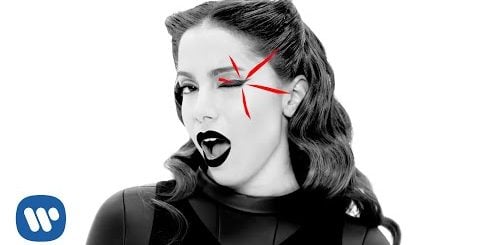
Menina Má by Anitta Lyrics Meaning – A Journey into Empowerment and Independence
Lyrics
Mas já digo, não vai rolar
Agora é tarde pra você querer me ganhar
Rebolo, te olho
Mas eu não quero mais ficar
Eu admito que acho graça em ver você babar
Vem, se deixa render
Vou como sereia naufragar você
Satisfaço o meu prazer
Te provocar
E deixar você querer
Agora eu vou me vingar
Menina má, eu vou provocar vou descer
Vou instigar, me pede beijo, eu desejo
Não vou beijar
Pode sonhar
Sou uma menina má
Agora eu vou me vingar
Menina má, eu vou provocar vou descer
Vou instigar, me pede beijo, eu desejo
Não vou beijar
Pode sonhar
Sou uma menina má
Me olha, deseja que eu veja
Mas já digo, não vai rolar
Agora é tarde pra você querer me ganhar
Rebolo, te olho
Mas eu não quero mais ficar
Eu admito que acho graça em ver você babar
Vem, se deixa render
Vou como sereia naufragar você
Satisfaço o meu prazer
Te provocar
E deixar você querer
Agora eu vou me vingar
Menina má, eu vou provocar vou descer
Vou instigar, me pede beijo, eu desejo
Não vou beijar
Pode sonhar
Sou uma menina má
Agora eu vou me vingar
Menina má, eu vou provocar vou descer
Vou instigar, me pede beijo, eu desejo
Não vou beijar
Pode sonhar
Sou uma menina má
Brazilian sensation Anitta has never been one to shy away from bold statements and assertive lyrics. Her song ‘Menina Má’ is no exception, serving as an anthem for independence and the power of self-worth. But to fully understand the energy and meaning behind the lyrics, one must dive deep into the cultural context, the persona Anitta constructs, and the message she’s conveying to her audience through the rhythm and words.
The song’s title, which translates to ‘Bad Girl’, might at first evoke the image of a rebel without a cause. However, Anitta gives the term a twist, celebrating the strength of character in a woman who is unafraid to stand her ground and unwilling to fall prey to someone else’s desires. Let’s explore the layers beneath this dance-floor hit and dissect what makes ‘Menina Má’ a tune of feminine empowerment.
The Siren’s Call – Anitta as the Modern Femme Fatale
‘Menina Má’ reveals Anitta’s seductive confidence and the control she exerts over her destiny – and those who dare to fall for her charm. By comparing herself to a siren, an emblematic figure known for leading sailors to their doom, Anitta flips the script. She becomes not the victim but the empowered antagonist who can choose to engage or disengage at will. This comparison speaks volumes about modern femininity’s evolving narrative, where women are reclaiming their portrayal from ancient myth to contemporary muse.
Anitta’s narrative rejects the traditional role cast upon women, to be passive recipients of male advances. Instead, she valiantly positions herself as the master of her fate, fully in charge of her sexual agency. The use of maritime imagery in ‘vou como sereia naufragar você’ accentuates her allure while hinting at the potential peril for those enticed by her spell – a reminder of her autonomy and power.
Dance of Defiance – Choreography as a Language of Control
The act of dancing, specifically Anitta’s mention of ‘Rebolo, te olho’, is not a mere movement to the beat; it becomes a language through which she communicates her dominance. The act of ‘rebolar’ – gyrating or shaking one’s hips suggestively – paired with the direct gaze is a deliberate tease, a show of being unattainable despite the obvious attraction. It is a statement of sovereignty over her own body, inviting admiration but denying ownership to the onlooker.
This dance of defiance also expands beyond the physical into the metaphoric, as it embodies the fine line women often have to tread between allure and respect, desire and independence. By choosing when and how to engage in this dance, Anitta lays down the rules of the game, refusing to be an object to be won over and instead becoming the player who dictates the terms.
The Hidden Meaning – Rejection as Empowerment
One might initially perceive ‘Menina Má’ as a song about a scorned lover seeking revenge, but the lyrics suggest something more subtle and profound. Anitta’s iteration of vengeance is not through malice or aggression but self-empowerment. This form of vengeance is psychological – an assertion of self-worth and the refusal to settle for anything less than what she deserves. It isn’t about harm; it’s about liberation from the grips of longing and dependency.
When Anitta sings ‘Agora eu vou me vingar’, the act of ‘vengeance’ is not aimed outwardly but is an internal process of self-validation. She’s reclaiming her power from a system that often sees bad girls as those who’ve lost their way. In contrast, Anitta redefines ‘menina má’ to mean a woman who is bad in the best way – bad at succumbing to manipulation, bad at playing the traditionally submissive female role.
Provocation and Desire – Commanding Presence in Lyrics
‘Menina Má’ doesn’t shy away from the interplay between provocation and desire. Anitta’s choice to provoke and then withhold (‘me pede beijo, eu desejo / Não vou beijar’) underlines the song’s central theme of power dynamics. To provoke is to incite a reaction, to stir a desire that will remain unquenched, because the subject’s willingness to engage is the true seat of power.
In a world where women’s actions are often misinterpreted as implicit agreements or invitations, Anitta’s explicit refusal aligns with contemporary conversations about consent and agency. Each repetition of ‘Não vou beijar’ is a powerful reinforcement of boundaries, turning what might seem like a simple pop song into a manifesto for bodily autonomy. It’s a message that resonates with a generation seeking to rewrite the cultural expectations of gender and sexuality.
Memorable Lines: The Echo of ‘Menina Má’
Certain lines in ‘Menina Má’ linger and echo, their repetition building an earworm that carries the song’s deeper messages. ‘Pode sonhar / Sou uma menina má’ is not just a catchy refrain; it’s an unyielding declaration that while the object of her lyrics may fantasize, she remains untouchable, a ‘bad girl’ by her own defining. This self-awareness and the declaration of her identity are emblematic of Anitta’s broader musical ethos, marrying catchy hooks with introspective content.
The line resonates not just because of its melodic hook but because it encapsulates the entire arc of the song: a journey from objectification to subjectification, from being the desired to being the desirer, and from being perceived as ‘má’ in the eyes of tradition to wearing it as a badge of honor in the modern context of empowerment and agency.