Modern Slavery by Huncho Jack Lyrics Meaning – Exploring the Paradox of Wealth and Bondage in Contemporary Culture
Lyrics
(Buddah Bless This Beat)
Since I
All these damn chains, modern slavery (ice)
But this ain’t 1800 so they pay me (cash)
Uh, yuh, shaking my demons off (shake ’em)
Dippin’ my dreams in sauce (dreams)
Never been food for sharks (nope)
Wrist like fins on dolphins (splash)
Pop hella bands and I’m paid (oh yeah)
Whip got a switch, I go brainless (oh yeah)
Sip after sip, I feel painless (oh yeah)
Yeah yeah, do it one time for team (yeah)
Burn it like gasoline (it’s lit)
Downing these jolly beans (alright)
Diamonds they frolicking (ice)
Red and blue matching drugs
Did ’em both just because (pop it)
They hoodie and maskin’ up (nah)
They the real Robin Hoods
Yeah, if I, let my
Gang out, bow down (gang)
Come ’round, gun you down
Hunt down (pew pew), hunt down (shoot)
Rampage, campaign
Champagne (ayy), I gain
Decades of no pain
At this age, they fugaz’
Who did you thought you was (who?)
Get’ em knocked off for dubs (pew)
Sit in the trap with bugs (trappin’)
Walk in the lab with scrubs (ayy)
Niggas tried to count us out (no)
Fuck you thought this was (huh)
Up like a coffee mug (up)
Save your salt for slugs (save it)
Hot on the block, you told 12, got the drop
Rubber bands and they pop, so we weigh up the knots
Cuban link cost a lot, Houston cred with a lot
Let it fall from the top, she gon’ bend, she gon’ pop, oh
All these damn chains, modern slavery (ice)
But this ain’t 1800 so they pay me (cash)
Uh, yuh, shaking my demons off (shake ’em)
Dippin’ my dreams in sauce (dreams)
Never been food for sharks (nope)
Wrist like fins on dolphins (splash)
Pop hella bands and I’m paid (oh yeah)
Whip got a switch, I go brainless (oh yeah)
Sip after sip, I feel painless (oh yeah)
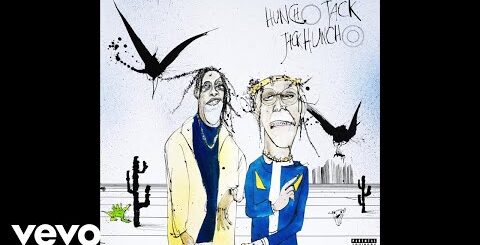
In the luminescent glow of luxury and excess, Huncho Jack’s track ‘Modern Slavery’ from their collaborative project ‘Huncho Jack, Jack Huncho’ unfolds a complex tapestry of contemporary hedonism juxtaposed with the chains of societal and self-imposed bondage. The song is a layered revelation, a provocative homage to wealth and freedom that questions the very fabric of what those terms mean in today’s world.
At first glance, the track is a buoyant celebration of success, a collage of glittering chains, overflowing champagne, and the trappings of modern celebrity. But a closer listen reveals an undercurrent of critique, an examination of the costs of this opulence and the subtle forms of enslavement that persist even as they assert their place at the zenith of financial gain.
The Chains That Bind: A Lyrical Analysis
The chorus of ‘Modern Slavery’ starkly contrasts with the luxurious images portrayed throughout the track. Despite the declaration of wealth and physical freedom – ‘But this ain’t 1800 so they pay me’ – the song juxtaposes this wealth with the metaphorical ‘chains’ of modern-day society. It’s a bold statement about the paradoxical nature of excess; the more you accumulate, the heavier the chains of your own desires and expectations become.
The repetitive mention of ‘ice’ and ‘cash’ are emblematic of this paradox, reflecting both the temperature of detachment that comes with materialism and the burning desire for more. While the track revels in the symbols of success, it also acknowledges the addictive cycle of consumption that defines modern slavery.
Confronting Demons with Diamonds – The Contrast in Coping
Beyond the glitter, Huncho Jack touches on darker motifs, such as battling inner demons and numbing pain with substance use. ‘Shaking my demons off’ and ‘Sip after sip, I feel painless’ lay bare the artists’ means of coping with their struggles. These lines suggest that, despite the visible trappings of success, there exists a need to escape, a necessity to dull the sharp edges of reality, furthering the allusion to slavery.
The juxtaposition of ‘shaking my demons off’ with ‘dipping my dreams in sauce’ evokes an image of both wrestling with and embracing the privileges their lifestyles afford them. It is this duality that resonates with the listener – the relentless pursuit of dreams while simultaneously being ensnared by them.
Modern Robin Hoods or Captives of Consumption?
The intriguing line ‘They the real Robin Hoods’ is a deviation into social commentary. By likening modern drug dealers to the fabled hero who stole from the rich to give to the poor, the songwriters draw a parallel between contemporary street hustles and the age-old tale of fighting against systemic oppression. This artistic choice raises questions about the moral ambiguity present in the battle for survival and success in the 21st century.
Huncho Jack’s utilization of the Robin Hood metaphor is a nod to an anti-hero status, where the artists wrestle with the idea of whether they are merely perpetuating a cycle of wealth and addiction or inadvertently redistributing wealth through alternative and often illegitimate means.
Decoding ‘Modern Slavery’: A Reflection on Freedom and Excess
Hidden beneath the skyline of high-rise luxury and nocturnal revelries is a provocative commentary on the illusion of freedom. ‘Modern Slavery’ uses irony and ingenious wordplay to explore the contradictory nature of success: Are we truly free if we are slaves to our desires and the means we employ to satiate them?
The song is not just an unboxing of the overt slavery that can be seen with the naked eye, but it also digs into more insidious forms of control – the societal pressures, the silent obligations to maintain status, and the internal wars waged with ego and expectation.
Lines That Echo in Our Ears: The Unforgettable Quotables
Certain lines from ‘Modern Slavery’ resonate long after the song ends, laying bare the reality of the human condition. The potency of ‘All these damn chains, modern slavery’ reverberates as a call to mindfulness about the tethers of our modern life. What is the cost of our indulgence, and who truly pays the price?
Additionally, ‘Uh, yuh, shaking my demons off’ is a powerful admission of personal struggle amidst the opulence that can define the hip-hop lifestyle. These memorable lines invite listeners to dance with their own shadows, to question whether the escape we seek in temporary pleasures might itself be a subtle shackle we choose not to see.