Same in the End by Sublime Lyrics Meaning – The Anthem of Shared Human Experience
Lyrics
They give it up and they give it up and they give it up
But they never ask why
Daddy was a rollin’, rollin’ stone
He rolled away one day and he never came home
It ain’t hard to understand
This ain’t Hitler’s master plan
What it takes to be a man
In my mind, in my brain
I roll it over like a steamin’ freight train
It ain’t hard to ascertain
You only see what you want to believe
When you light up in the back with those tricks up your sleeve
That don’t mean I can’t hang
The day that I die
Will be the day that I shut my mouth and put down my guitar
Sunday morning hold church down at the bar
Get down on your knees and start to pray
Pray my itchy rash will go away
Back up y’all it ain’t me
Kentucky Fried Chicken is all I see
It’s a hellified way to start your day
If I make you cry all night
Me and daddy gonna have a fist fight
It ain’t personal, it ain’t me
I only hear what you told me to be
I’m a backward-ass hillbilly
I’m Dick Butkiss
You know I lie
I get mean, I’m a thief in the dark
I’m a ragin’ machine
I’m a triple rectified ass son of a bitch
Rec-tite on my ass and it makes me itch
I can see for miles and miles and miles
My broken heart makes me smile
In my mind, in my brain
I go back and go completely insane
It ain’t personal, it ain’t me
If I make you cry I might
Be your daddy at the end of the night
Take a load from my big gun
You only see what you want to believe
When you creep from the back
I got tricks up my sleeve
Twenty four seven, devil’s best friend
It makes no difference
It’s all the same in the end
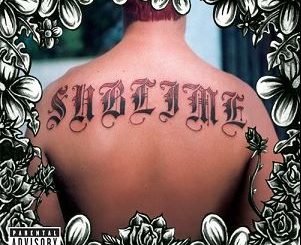
The rhythmic beats of Sublime have not only defined an era but have continued to resonate with fans of ska-punk long after their time in the limelight. With their eclectic fusion of reggae, punk, and hip-hop, Sublime transcended musical norms to create tracks that are undeniably evocative of their Long Beach roots. ‘Same in the End’, a lesser sung track off their 1996 self-titled album, epitomizes this cross-genre brilliance. But much more than melody and beat, the song is a complex poetic discourse on life’s inexorable truths.
The song, pulsing with vivid imagery and visceral frustrations, slices through the superficial layers of society to reveal underlying universal themes. It speaks to the human condition in raw, unflinching terms, tackling the essence of existence with a brutal honesty that forces introspection. Dissecting its stanzas reveals Sublime’s intent to lay bare the commonalities that define and often haunt our mortal journey.
The Inescapable Heat of Existence
The opening lines of ‘Same in the End’ immediately transport the listener to the sweltering landscapes of Mississippi, symbolic of life’s relentless pressures. The repetition of ‘they give it up’ punctuates the exhaustion felt from a seemingly fruitless struggle against the grind of daily existence. The sun that ‘beats down from the sky’ is a metaphor for the inescapable forces that govern our lives – our own relentless inner critics, society’s expectations, and even fate itself.
Listening further, the legacy of the ‘rollin’ stone’ father paints the all-too-familiar narrative of abandonment and the holes that absent figures leave in the fabric of family life. With its bluesy undertones, the song taps into the haunting American tale of transient love and the search for something that often keeps people rolling, searching, never staying, never healing.
Dissecting Delusion with a Loaded Guitar
As the chords strike deeper into the song, there’s a poignant acknowledgment of human deception – ‘You only see what you want to believe’. The sentiment reflects the self-imposed blinders that color our perceptions and ultimately our reality. The ‘tricks up your sleeve’ represent the deceptions we employ, consciously or unconsciously, to support these beliefs.
Contrarily, the song’s protagonist declares a personal authenticity with the pledge to speak up and make music until death. The notion of finding solace and truth in art, while holding church down at the bar, captures the sanctity found in places and activities outside the traditional. Sublime here champions the idea of finding one’s own path to personal salvation and truth, even if it comes packaged in irreverence and rowdiness.
Master Plan or Existential Misfire?
When they assert, ‘This ain’t Hitler’s master plan’, Sublime conjures a labyrinth of interpretations. This line is not only a symbolic rejection of totalitarian control but also an acceptance that life’s chaos is not part of an overarching, malign design. The song expresses a sort of existential disillusionment paired with a stark resistance to the notion that we are part of a pre-planned narrative.
Rolling further, there’s a rumination on what it takes to be a man, taking us through a mental journey equivalent to a ‘steamin’ freight train’. The song skids through notions of masculinity, strength, and identity—a clash between the societal verses personal definitions of what manhood should be, underscoring the confusion and discontent that oftentimes accompany this search for self.
A Heart’s Ragged Insanity
In the psychological unraveling of the song’s character, we witness a descent into self-proclaimed madness. The description of becoming ‘a backward-ass hillbilly’, ‘Dick Butkiss’, or a ‘thief in the dark’ is a raw embodiment of the persona we all adopt at times—flawed, defensive, and even aggressive. Sublime’s ability to channel angst and inner demons into poetic phrases gives voice to the darker aspects of human nature we often attempt to conceal.
As the lyrics turn, ‘my broken heart makes me smile’, suddenly there’s an eerie defiance in the acknowledgment of their own brokenness. It’s as if the song is finding solace in self-destruction, suggesting that some elements of personal suffering become so intrinsic to our identity that they take up a paradoxically comforting space within us.
The Relevatory Crescendo: It’s All The Same in the End
Towards the end, the song builds to a crescendo that rings with fatalistic clarity: ‘It makes no difference / It’s all the same in the end’. The song thereby lends itself to the perspective of existential equality—the notion that regardless of the path chosen, the highs savored, or the lows suffered, mortality levels us all to a common denominator.
In this haunting declaration, Sublime arguably finds a kinship with the philosophies of existential writers of the past. There’s an echo of Camus’s absurdism here, a reflection of Sartre’s existential angst, and perhaps a nod to the raw realism of Bukowski’s poetry. These lines cement the song’s place as not only a track to jive to but also as an anthem of shared human experience – the sublime realization that in life’s grand tapestry, we are all same in the end.