Slaughter of the Soul by At the Gates Lyrics Meaning – Unraveling the Threads of Desolation
Lyrics
Never again
On your force-fed illusions to choke
You feed off my pain
Feed off my life
There won’t be another dawn
We will reap as we have sown
Always the same
My tired eyes have seen enough
Of all your lies
My hate is blind
There won’t be another dawn
We will reap as we have sown
Reap as we have sown
Do it
Slaughter of the soul
Suicidal final art
Children born of sin
Tear your soul apart
Never again
My tired eyes have seen enough
Of all your lies
My hate is blind
There won’t be another dawn
We will reap as we have sown
Reap as we have sown
Slaughter of the soul
Suicidal final art
Children born of sin
Tear your soul apart
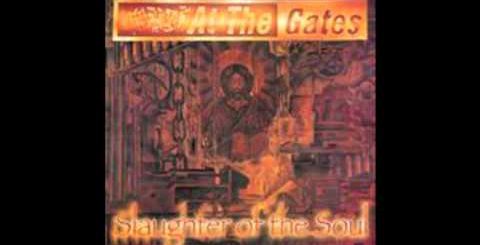
Thrust into the limelight of the melodic death metal scene, the 1995 track ‘Slaughter of the Soul’ by At the Gates stands as a monolith of grim poetry, enshrined in a sea of aggressive guitar riffs and frenzied drumming. A track that bursts at the seams with raw emotion, it has etched itself into the canon of metal anthems by offering something that goes beyond music—a harrowing glimpse into a soul besieged by disillusionment.
Few songs manage to capture the essence of their genre while simultaneously transcending it to speak on a universal level. ‘Slaughter of the Soul’ achieves this through aggressively portrayed metaphors and vivid imagery, enticing listeners into a world wearied by lies, deceit, and the human propensity for self-destruction.
A Visceral Response to Life’s Illusory Feast
“Never again on your force-fed illusions to choke. You feed off my pain, feed off my life,” the band exclaims, offering a searing indictment of a voracious society that thrives on the consumption of others’ suffering. This line is a gut punch to complacency, challenging the listener to confront the parasitic nature of systems built to profit from the agony they inflict.
With a recognition of this parasitic relationship, there emerges a statement of defiance. Refusing to be a perpetual victim to life’s ills and the lies perpetuated by a corrupt moral compass, the song’s protagonist promises that the dawn of their compliance will never rise again.
We Will Reap As We Have Sown – The Inescapable Cycle
Repetition serves as a crucial device in ‘Slaughter of the Soul,’ wherein the phrase “We will reap as we have sown” becomes a mantra for accountability. It can be construed both as a warning and as a resignation to the consequences of our actions, whether individual or collective.
This inevitability of retribution echoes throughout the song, marrying the inevitability of comeuppance with the deterministic threads of fate. It lays bare a universe that is indifferent to the suffering of its inhabitants, watching with impartial eyes as the cycles of cause and effect play out in perpetuity.
The Weight of Eternal Fatigue – Eyes that Have Seen Too Much
“My tired eyes have seen enough of all your lies. My hate is blind,” captures a weariness that goes beyond physical exhaustion. It speaks to a soul-level exasperation, a mental burden brought upon by the relentless parade of dishonesty that one encounters.
This weariness transcends despair. It hints at an internal transformation, where the protagonist’s disillusionment blooms into a blinding hate—an emotional shield against the recurring disappointments that life metes out.
The Hidden Meaning – A Lamentation of the Human Condition
At its heart, ‘Slaughter of the Soul’ is a lament. It’s not merely a chronicle of personal anguish, but a deeper commentary on the human condition. Born into a world that is frayed and corrupted, individuals described as “children born of sin” are invariably destined to tear their souls apart in a tragic search for purity in a tainted realm.
The song is an artistic mirror reflecting the existential dread and the search for authenticity in an often inauthentic world. It might be perceived as existentialist in tone, acknowledging the pain of existence while bravely staring into its abyss.
Suicidal Final Art – The Catharsis of Creative Destruction
The phrase “Suicidal final art” is a potent line that reverberates with the song’s core themes. It encapsulates the idea that there is a form of artistry in self-obliteration—a poetic symmetry to the way in which the soul can orchestrate its own demise.
Yet, rather than suggesting physical self-harm, it proposes a metaphysical rebellion against the elements that bind the spirit, an artistic defiance that ultimately becomes the most personal act of freedom. In its crescendo, the song thus becomes the canvas for the soul’s final, most defiant portrayal of itself.