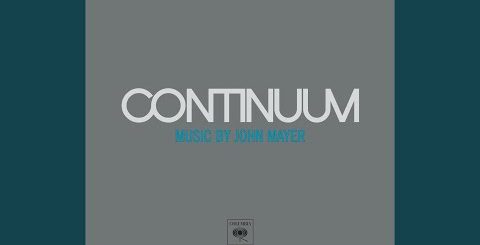
Speak for Me by John Mayer Lyrics Meaning – Unveiling the Struggle for Authenticity in Music
Lyrics
Ain’t the cover of a Rolling Stone
And the music on my radio
Ain’t supposed to make me feel alone
Would you liked to know
Have to learn to let it go
Show me something I can be
Play a song that I can sing
Make me feel as I am free
Someone come speak for me
Well they’re celebrating broken things
I don’t wanna world of broken things
You can tell that something isn’t right
When all your heroes are in black and white
Would you have liked to say
At least I still have yesterday
Show me something I can be
Play a song that I can sing
Make me feel as I am free
Someone come speak for me
Someone come speak for me
La di da di da
La di da di da
La di da di da di da di da
La di da di da di da di da
Hey
I’m not mad about it
But I’m not mad about it
I’m not mad about it
But I’m not that mad about it
Just show me something I can be
Play a song that I can sing
Make me feel as I am free
Someone come speak for me
Someone come speak for me
Someone come speak for me
Now the cover of a Rolling Stone
Ain’t the cover of a Rolling Stone
In an era where music often feels processed, commercialized, and far-removed from the raw roots of its inception, John Mayer’s ‘Speak for Me’ emerges as a yearning anthem for authenticity. Mayer’s reflective lyricism and introspective guitar lines serve as a vessel for listeners to navigate the complexities of seeking genuineness in a seemingly fabricated world.
Dissecting the tender layers of ‘Speak for Me,’ one uncovers the artist’s personal battles with the music industry and his quest for a spokesperson amidst the noise—a call for sincerity where it has been lost. This exploration offers insight into Mayer’s deeper thoughts and artistic vision, propelling us to consider the true essence of music in our own lives.
An Elegy for the Golden Days of Music
Mayer’s opening lines immediately set the tone for nostalgic lament; the coveted cover of ‘A Rolling Stone’ no longer signifies what it once did. There’s a clarity in his melancholy as he distinguishes the iconic imagery of the past from today’s watered-down interpretations. This can be seen as a critique, mourning the transformation of music from an art that inflamed passions to a product that now often induces solitude.
As Mayer croons about his radio no longer fulfilling its role as a companion, listeners are invited to reflect on their own interacting experiences. The song positions itself as a mirror, questioning whether the musical landscape of today truly resonates with our innermost feelings or simply leaves us isolated in a crowd.
A Cry for Authentic Representation
The chorus resonates like a plea for representation in a medium that’s become increasingly alien. Mayer is seeking more than a voice — he’s searching for an advocate, a figure or perhaps a moment in music that can articulate the words and emotions he finds himself unable to express. In a way, Mayer’s request goes beyond personal desire, touching upon the collective yearning for a representative who can capture the zeitgeist of the disillusioned.
Mayer’s call for someone to ‘speak for me’ is as much an invitation for artists to be bold and original as it is a testament to the power of music as the voice of generations. This bold chorus hits at the heart of the song’s sentiment, encapsulating the hope for a revival of music as a revolutionary force.
Broken Things and the Loss of Heroes
There’s a haunting beauty in Mayer’s reflection on ‘celebrating broken things.’ It’s an observation of how society seems to revel in the flawed and the fractured, rather than aspiring to the wholesome icons of yesteryear. This may serve as an allegory for the music industry’s glamorization of turmoil and the elevation of figures who are admired not for talent, but for their brokenness.
Mayer’s lamentation also touches on the loss of black and white heroes—those who stood firmly in their convictions without the mire of controversy to cloud their legacies. In doing so, he casts a spotlight on our current craving for simplicity and moral clarity in an age where the lines are often blurred, especially within the complex world of the music industry.
The Quest for Freedom in Expression
Throughout ‘Speak for Me,’ there’s a persistent theme of emancipation. Mayer seeks to feel ‘as I am free,’ emphasizing the intrinsic link between creativity and liberty. What the artist requires is a means to freely express himself—an avenue unrestricted by the norms and expectations that often stifle originality. This is a bold statement about the essential nature of freedom as it pertains not just to artists but to all individuals seeking to voice their truth.
The repeated calls for a song that he can sing and something he can be reflect a universal struggle to find one’s place in the world. Mayer here becomes every person whose voice feels drowned out by the conformity and pressures of a society that often demands silence over authentic expression.
The Memorable Refrain and Its Resonance
John Mayer’s declaration, ‘I’m not mad about it, but I’m not that mad about it,’ serves as a complex refrain that echoes throughout the song. This line strikes a delicate balance between resignation and understated rebellion. It reveals Mayer’s internal battle—a grappling with the state of the music industry and his role within it, all while maintaining a certain level of detachment or perhaps a measured defiance.
The cognitive dissonance captured within this lyric suggests that while Mayer may not be overtly furious, there is a latent frustration simmering beneath the facade. This nuanced approach to dissatisfaction presents the listener with a raw and relatable emotional duality—a hallmark of Mayer’s songwriting prowess that allows the song to both captivate and provoke thought.