Star Treatment by Arctic Monkeys Lyrics Meaning – Navigating Stardust and the Daze of Modern Fame
Lyrics
Now look at the mess you made me make
Hitchhiking with a monogrammed suitcase
Miles away from any half-useful imaginary highway
I’m a big name in deep space
Ask your mates but golden boy’s in bad shape
I found out the hard way
That here ain’t no place for dolls like you and me
Everybody’s on a barge
Floating down the endless stream of great TV
1984, 2019
Maybe I was a little too wild in the 70s
Rocket-ship grease down the cracks of my knuckles
Karate bandana
Warp speed chic
Hair down to there
Impressive moustache
Love came in a bottle with a twist off cap
Let’s all have a swig and do a hot lap
So who you gonna call?
The martini police
Baby, that isn’t how they look tonight, oh no
It took the light forever to get to your eyes
I just wanted to be one of those ghosts
You thought that you could forget
And then I haunt you via the rear view mirror
On a long drive from the back seat
But it’s alright ’cause you love me
And you recognize that it ain’t how it should be
Your eyes are heavy and the weather’s getting ugly
So pull over, I know the place
Don’t you know an apparition is a cheap date?
What exactly is it you’ve been drinking these days?
Jukebox in the corner
Long hot summer
They’ve got a film up on the wall and it’s dark enough to dance
What do you mean you’ve never seen Blade Runner?
Oh, maybe I was a little too wild in the 70s
Back down to earth with a lounge singer shimmer
Elevator down to my make believe residency
From the honeymoon suite
Two shows a day, four nights a week
Easy money
So who you gonna call?
The martini police
So who you gonna call?
The martini police
Baby, that isn’t how they look tonight
It took the light absolutely forever to get to your eyes
And as we gaze skyward, ain’t it dark early?
It’s the star treatment, yeah
And as we gaze skyward, ain’t it dark early?
It’s the star treatment
It’s the star treatment
The star treatment
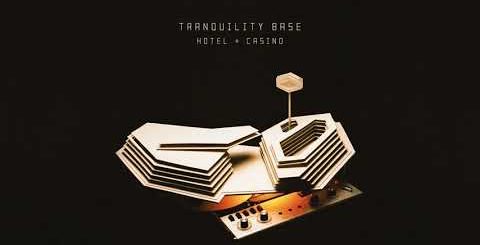
The Arctic Monkeys, a band that has consistently reinvented themselves album after album, took a giant leap into the cosmic lounge with ‘Star Treatment’, the opening track of their sixth studio album ‘Tranquility Base Hotel & Casino’. Frontman Alex Turner weaves a web of introspection and social commentary with this brooding ballad that drifts between past and present, between Earth and the stars.
Draped in the velvet of Turner’s piano chords and a wistful melody, the song confronts the absurdity of celebrity culture and the disorientation of personal evolution. It’s an opening track that sets the tone for an album that feels both like a departure and a homecoming for one of rock’s most esteemed acts.
Lament of a Reluctant Star: Reflecting on Fame’s Follies
Turner opens with a rueful reflection on his early aspirations, wishing simply to be ‘one of The Strokes’, a nod to the influence of fellow rock contemporaries. His illusions of the music industry quickly dissolve into a ‘mess’ he feels responsible for. This sets the stage for a discourse on the altered reality of the famous—a reality that is distant, hollow, and often littered with missteps.
Such a stark opening salvo gives way to a broader critique of popular culture, where being a ‘big name in deep space’ translates to availing oneself to the dissolving effect of the public gaze. Turner confronts the irony of being both highly visible and utterly obscured, a motif that persists throughout the song.
The Martini Police: Haunting Nostalgia with a Twist of Modern Anguish
‘So who you gonna call? The martini police’—the line evokes a spectral force overseeing the indulgences of a bygone era. This peculiar refrain can be deciphered as a call to the arbiters of taste, those who once dictated the swinging cool of the ‘70s but are now as outmoded as the bands of that time in the eyes of a new generation.
Yet, the phrase also paints an image of the archaic being chased by the contemporary. Turner’s imagery seems to be grappling with the transitory nature of relevance, a topic close to the heart of any artist navigating the mercurial tides of popular culture. It’s a reminder that, despite changes in the zeitgeist, some remnants always linger in the backdrop of the collective consciousness.
The Eternal Dance of the Ghosts of Pop Past
Desiring to be ‘one of those ghosts’ is a double-edged sword; Turner admits a yearning to be memorable, yet fears being trapped in a cycle of perpetual haunting, a rearview apparition that’s never really left behind. The ghosts represent former selves, obsolete identities that continue to cling despite having moved on to new forms.
In a world where history is continuously recontextualized by media—’floating down the endless stream of great TV’—to be a ghost is to be simultaneously erased and remembered, an awkward juxtaposition that Turner embodies throughout ‘Star Treatment’.
Unpacking the Hidden Gem: ‘Ain’t It Dark Early?’
One could muse for hours on the line ‘And as we gaze skyward, ain’t it dark early?’—a metaphor that captures the essence of the song’s critique on stardom and the zeitgeist of the era it scrutinizes. Turner poses a question that attests to the premature arrival of night, or metaphorically, the overshadowing of substance by the superficial glitz of celebrity.
The ‘star treatment’ hence isn’t just a term for privilege; it’s the early darkness, the looming obscurity that follows a fleeting moment in the limelight. Through this clandestine whisper of a line, Turner encapsulates the dread encircling the very pedestal upon which stars are placed.
Poignant Reflections and Memorable Musings: ‘Back Down to Earth’
The line ‘Back down to earth with a lounge singer shimmer’ jolts the listener from the orbit of Turner’s space-set narrative back to the grounding reality of performance and its pedestrian hustle. The song circles back to Turner’s confession of easy money and routine shows—’two shows a day, four nights a week’.
It’s a life that glitters superficially but lacks the substance that once forged the very identity of the artist. Herein lies one of Star Treatment’s most evocative admissions: the inherent conflict between the artist’s desire for significance and the industry’s churn of commodifiable nostalgia.