Suffer Little Children by The Smiths Lyrics Meaning – Unpacking the Tragic Echoes of the Moors Murders
Lyrics
Dig a shallow grave
And I’ll lay me down
Over the moor, take me to the moor
Dig a shallow grave
And I’ll lay me down
Lesley-Anne, with your pretty white beads
Oh John, you’ll never be a man
And you’ll never see your home again
Oh Manchester, so much to answer for
Edward, see those alluring lights ?
Tonight will be your very last night
A woman said : “I know my son is dead
I’ll never rest my hands on his sacred head”
Hindley wakes and Hindley says :
Hindley wakes, Hindley wakes, Hindley wakes, and says :
“Oh, wherever he has gone, I have gone”
But fresh lilaced moorland fields
Cannot hide the stolid stench of death
Fresh lilaced moorland fields
Cannot hide the stolid stench of death
Hindley wakes and says :
Hindley wakes, Hindley wakes, Hindley wakes, and says :
“Oh, whatever he has done, I have done”
But this is no easy ride
For a child cries :
“Oh, find me…find me, nothing more
We are on a sullen misty moor
We may be dead and we may be gone
But we will be, we will be, we will be, right by your side
Until the day you die
This is no easy ride
We will haunt you when you laugh
Yes, you could say we’re a team
You might sleep
You might sleep
You might sleep
BUT YOU WILL NEVER DREAM !
Oh, you might sleep
BUT YOU WILL NEVER DREAM !
You might sleep
BUT YOU WILL NEVER DREAM !”
Oh Manchester, so much to answer for
Oh Manchester, so much to answer for
Oh, find me, find me !
Find me !
I’ll haunt you when you laugh
Oh, I’ll haunt you when you laugh
You might sleep
BUT YOU WILL NEVER DREAM !
Oh…
Over the moors, I’m on the moor
Oh, over the moor
Oh, the child is on the moor
At first glance, The Smiths’ ‘Suffer Little Children’ might just seem like another entry in their repertoire of melancholy and morose songs. However, a closer inspection reveals a chilling narrative, interwoven with the historical tapestry of one of Britain’s most haunting crime stories—a tragic ballad that captures the essence of both loss and the geographical fingerprint it leaves on collective memory.
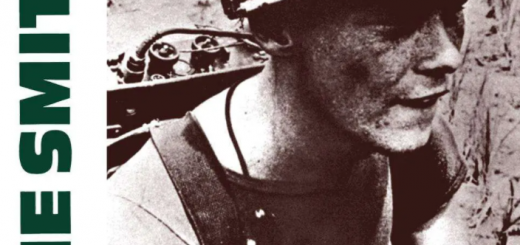
Penned by frontman Morrissey and guitarist Johnny Marr, ‘Suffer Little Children’ serves as a poignant endnote to the band’s eponymous debut album, ‘The Smiths’. What makes the track stand out is not just its evocative melody but the weight of its narrative, soaked in the sorrow of the Moors Murders that rocked Manchester in the 1960s. But what deeper meanings and implications lie behind its somber lyrics, and why does it echo so profoundly through the years?
The Haunting History Behind the Harmony
To contextualize ‘Suffer Little Children,’ it’s crucial to peer into the dark crevices it musically inhabits. The song is a direct reference to the Moors Murders, a series of abductions and killings of children carried out by Ian Brady and Myra Hindley. These murders were carried out against a backdrop of the innocent, wild expanses of the English countryside, the moors becoming a stark gravesite and contrast to childhood innocence.
Morrissey’s lyrics don’t only draw up a narrative; they intertwine with Manchester’s collective memory, resurrecting the names of the victims—Edward, Lesley-Anne, and John—in an ode to lives brutally cut short. The haunting repetition in the lyrics serves to embody the obsession and the cyclical nature of the crime and its remembrance.
Unearthing the Symbolism in Shallow Graves
The repeated calls to ‘over the moor’ and burying ‘in a shallow grave’ transcend a simplistic view of burial practices. Symbolically, these actions evoke the idea that no sin or action is too deep to evade eventual exposure. The ‘shallow grave’ serves as a metaphor for the impossibility of hiding evil, as it will eventually—much like the stolid ‘stench of death’—rise to the surface.
Further, ‘Suffer Little Children’ speaks to the exposure not just of the murderers’ deeds but the broader societal ills that allow for such tragedies. Manchester, the once thriving industrial metropolis, is held to account, perhaps indicted for the socioeconomic conditions contributing to a landscape wherein such darkness could fester.
Mapping the Moral Compass of Complicity
One of the most disturbing elements of ‘Suffer Little Children’ is the portrayal of Hindley’s identification with the crimes. The line ‘Oh, whatever he has done, I have done’ chillingly captures the shared guilt in a collective ‘we’, suggesting a much wider complicity, hinting at societal and individual failings that enable such horrors to unfold.
This shared complicity could also be read in the way the community remembers the atrocity—the act of never forgetting can be paradoxically both a curse and a requisite form of remembrance for the victims. The song compels listeners to confront the uncomfortable truth that these events are not just historical but part of a current, lived reality.
A Cry from the Moor: The Song’s Hidden Meaning
The ethos of ‘Suffer Little Children’ carries a hidden meaning, transcending the narrative of the Moors Murders to question the nature of justice and afterlife. The ghostly cries of ‘Oh, find me…find me, nothing more’ embody the souls of the innocent seeking solace, longing for a peace that perhaps neither life nor death could offer.
It’s the spectral presence, the eternal haunting of the laughing living by the never-dreaming dead that seeps into the song’s fabric. The children’s avowal to stay ‘right by your side’ until death, haunting every moment of joy, serves as a grim reminder of the inescapable shadows cast by such unfathomable crimes.
Memorable Lines: The Poetry of Pain
Morrissey’s penchant for poetic expression reaches a peak in ‘Suffer Little Children’, with lines that echo long after the song concludes. ‘You might sleep, BUT YOU WILL NEVER DREAM!’ is one such line, capturing the complete obliteration of innocence and peace, the severing of the comforting veil between consciousness and sleep.
The juxtaposition of mundane beauty, ‘fresh lilaced moorland fields’, with the ‘stolid stench of death’, illustrates the complex tapestry of human experience, binding beauty and horror, life and death—the inextricable dance of human existence. This memorable line perfectly encapsulates the song’s power to haunt and challenge the listener with its introspective sorrow.