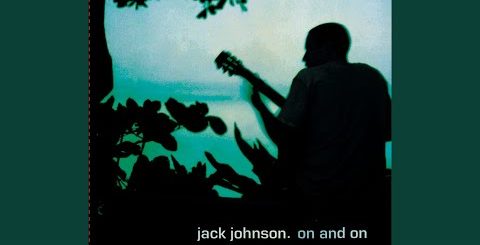
Symbol In My Driveway by Jack Johnson Lyrics Meaning – A Dive into the Symbolism of Modern Life
Lyrics
I’ve got a hundred million dollar friends
I’ve got you a brand new weapon
Let’s see how destructive we can be
Got a brand new set of stencils
I’ve been connecting all the dots
Got my plans in a zip-lock bag
Let’s see how unproductive we can be
I’ve got a light bulb full of anger
And I can switch it on and off
Situations that can be so bright
I can’t believe
How pathetic we can be
I’ve got a perfect set of blueprints
I’m gonna build somebody else
Might cost a little more than money
But what’s man without his wealth?
I’ve got a phosphorescent secret
But don’t you tell nobody else
Next thing you know
The whole world will be talking
About all the clues they got
They just ain’t no use because
I had a mosquito on my nose
Why does a guitar have strings?
Jack Johnson’s ‘Symbol In My Driveway’ is an emblematic piece that paints a picture of contemporary culture with a palette of contradictions and subtleties often overlooked by the casual listener. Through its laid-back, folksy vibe, Johnson delivers a narrative rich with symbolism, inviting a contemplation of materialism, personal ambition, and societal norms.
As Johnson serenades us with his acoustic charm, we’re coaxed into examining the layers beneath this seemingly mellow tune. The careful arrangement of lyrics offers a nuanced look at the human condition, making ‘Symbol In My Driveway’ a treasure trove of meaning waiting to be unearthed in the quiet corner of our consumer-driven lives.
The Driveway as a Mirror to the Soul
The titular ‘symbol in my driveway’ can be seen as a metaphor for status symbols that society obsesses over. Johnson’s driveway here is not just a patch of concrete; it’s where one’s identity is staked on the display of wealth and achievements. By disclosing he has ‘a hundred million dollar friends,’ Johnson immediately dives into the critique of relationships built on the superficial basis of wealth rather than genuine connection.
These symbols, hollow yet glorified, offer a critique of how modern individuals often validate their worth. The driveway is not merely a symbol; it’s the canvas where the artist questions our collective values and our measures of self-worth, juxtaposed against a culture that peddles the necessity of material badges of honor.
Unveiling the Weapon of Self-Destruction
Johnson’s gift of a ‘brand new weapon’ and the invitation to indulge in self-destruction is a powerful indictment of the ways society arms us with the means to harm ourselves. Whether it’s technology, social media, or our ego, Johnson invokes the imagery of a weapon as a conduit for critique – suggesting that in the quest for progress, humanity often overlooks the toll its actions take.
The weapon here symbolizes the tools that, while intended for advancement or entertainment, end up being used in ways that detract from our humanity. In a world where efficiency and productivity are king, Johnson daringly asks us to consider our own destructiveness – a challenge that resonates in the era of climate change and social disconnection.
An Illuminated Take on Anger and Apathy
Johnson’s ‘light bulb full of anger’ encapsulates the flickering intensity of human emotions that can illuminate or burn. It speaks to the ability of people to switch on anger for various situations, and the futility that can follow. The palpable frustration with the state of affairs suggests a broader discontent that ricochets through the listener’s conscience.
The brilliance of this line doesn’t end with its critique, but also reflects on the vacillating nature of human engagement—how quickly one can go from invested to indifferent, from enlightened to ignorant, echoing a societal tendency to lose sight of the long-term for the immediate and the superficial.
Blueprints of Existence: Redefining Self and Wealth
A critical turning point within the song lies in the proclamation of possessing ‘a perfect set of blueprints’ intending to ‘build somebody else.’ Here, Johnson confronts the dilemma of identity creation and the pressures of conforming to societal expectations. The architect in him recognizes the potential costs that transcend monetary value—implying that wealth, while tangible, is not the sole measure of a man’s essence.
In this way, Johnson raises a mirror to the listener’s own sentiment of self-worth, questioning whether external achievements are an accurate reflection of internal fulfillment. Through clever songwriting, he prompts a reckoning with the concept of personal wealth, not in terms of material possessions, but as a richer tapestry of character and experience.
The Lighthearted Wisdom of a Mosquito and Guitar Strings
The surrealistic touch of ‘I had a mosquito on my nose’ contrasts the heavier connotations pervading the song, suggesting that not all life’s questions hold substantial weight. It’s an invitation to laugh at the absurdity, to recognize that in our quest for meaning, we are sometimes confronted with the meaningless. A mosquito is just a mosquito, much like a guitar’s strings are simply that—strings.
This duality, embedded within the song’s conclusion with a seemingly nonsensical query about a guitar, cleverly encapsulates the entire essence of the piece. Johnson calls on us to revel in life’s simplicity amidst our pursuit of complexity. It’s a gentle reminder that perhaps not all pursuits should be laden with the gravity we often ascribe and that sometimes the bare essentials—like the unpretentious melody of a song—are what truly resonate.