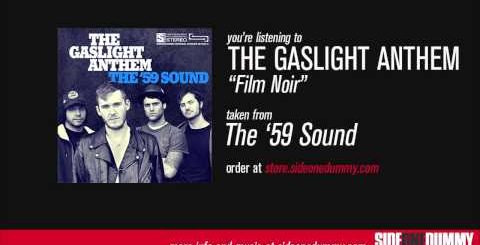
The ’59 Sound by The Gaslight Anthem Lyrics Meaning – A Journey Through Nostalgia and Mortality
Lyrics
I hope it’s something quiet and minor and peaceful and slow.
When we float out into the ether, into the Everlasting Arms,
I hope we don’t hear Marley’s chains we forged in life.
‘Cause the chains I been hearing now for most of my life,
The chains I been hearing now for most of my life.
Did you hear the fifty-nine Sound coming through on grandmother’s radio?
Did you hear the rattling chains in the hospital walls?
Did you hear the old gospel choir when they came to carry you over?
Did you hear your favorite song one last time?
And I wonder were you scared when the metal hit the glass?
See, I was playing a show down the road
When your spirit left your body.
And they told me on the front lawn.
I’m sorry I couldn’t go,
But I still know the song and the words and her name and the reasons.
And I know ’cause we were kids and we used to hang
I know ’cause we were kids and we used to hang
Did you hear the fifty-nine sound coming through on grandmother’s radio?
Did you hear the rattling chains in the hospital walls?
Did you hear the old gospel choir when they came to carry you over?
Did you hear your favorite song one last time?
Young boys, young girls,
Young boys, young girls,
Young boys, young girls,
Young boys, young girls,
Ain’t supposed to die on a Saturday night,
Ain’t supposed to die on a Saturday night,
Ain’t supposed to die on a Saturday night,
Ain’t supposed to die on a Saturday night,
Did you hear the fifty-nine sound coming through on grandfather’s radio?
Did you hear the rattling chains in the hospital walls?
Did you hear the old gospel choir when they came to carry you over?
Did you hear your favorite song one last time?
Young boys, young girls,
Young boys, young girls.
The Gaslight Anthem’s ‘The ’59 Sound’ reverberates like a haunting echo from a bygone era, capturing the raw essence of nostalgia and the stark reality of mortality. With its evocative lyrics and anthemic melody, the track has cemented itself as a timeless piece in the realm of punk rock balladry.
Peeling back the layers of this auditory canvas, we find a complex interplay of memory and loss, a longing for the simplicity of youth juxtaposed against the inevitability of death. It is the melancholic anthem of a generation, punctuated by the clanging chains of life’s unyielding march.
An Echo from the Past: Conjuring the Mystique of ‘59
The titular ’59 Sound isn’t merely a reference to a certain year or an old radio frequency; it represents a portal to the past, a frequency laden with the familiar tunes that score our most cherished memories. When Brian Fallon, frontman of the Gaslight Anthem, croons about the ’59 Sound, he’s invoking the spirit of a time that’s slipped away, a period that must be revisited through the static of an old radio to truly grasp its emotional weight.
It’s a sound that is shared across generations, a communal experience that, no matter the year, bears the universal language of emotion, connecting individuals through shared moments of musical indulgence.
The Shackles We Wear: The Vivid Imagery of Chains
Chains in ‘The ’59 Sound’ are an evocative symbol, a metaphorical representation of the burdens and regrets we carry through life. As Fallon reflects on the hope of not hearing ‘Marley’s chains we forged in life,’ there is a direct allusion to Charles Dickens’ ‘A Christmas Carol,’ where Jacob Marley is fettered by chains wrought from his own misdeeds.
The constant auditory presence of chains in the song paints a picture of an internal struggle, where each character is tethered to their own history, hopeful for redemption and solace in the form of quiet, minor chords, and slow melodies – a musical reprieve from the weight of existence.
The Reverberating Soundscape of Youth and Tragedy
Central to ‘The ’59 Sound’ is the theme of youth’s fragility, embodied in the tragic line, ‘Ain’t supposed to die on a Saturday night.’ Here, the suddenness and unfairness of an early death is starkly contrasted with the carefree associations of the weekend, a stark reminder of the thin line between joy and sorrow.
These poignant moments are enveloped in the familiar tones of a radio, gospel choirs, and the rattling of hospital chains, creating a sensory rich narrative that paints the nightmarish reality of life’s fleeting nature.
Decoding the Song’s Hidden Meanings
Beneath the surface of what appears to be another song dripping with nostalgia lies a deeper commentary on how we reconcile with the passing of time. The ’59 Sound is not just heard; it is felt as it passes through generations like whispered wisdom, shaping our perception of life and death.
The refrain ‘Did you hear your favorite song one last time?’ is a heart-wrenching meditation on the finality of human experience, on the things that remain unsaid and unheard, on the melodies that define our existence but are often taken for granted until it is too late.
Memorable Lines That Haunt and Heal
Music has the power to immortalize moments, and The Gaslight Anthem’s lyrics in ‘The ’59 Sound’ are no exception. Phrases like ‘I hope we don’t hear Marley’s chains we forged in life’ and ‘Did you hear the old gospel choir when they came to carry you over?’ linger in the mind long after the song has ended.
These words not only haunt the listener but provide a salve for the soul, presenting a pathway through which we can confront the existential angst of our lives. It’s a promise that while we may all carry chains, there’s still a chance for solace through the strains of that ’59 Sound.