The Bewlay Brothers by David Bowie Lyrics Meaning – Unraveling the Enigmatic Heartbeat of a Classic
Lyrics
They said the things to make it seem improbable
Whale of a lie like they hope it was
And the good men tomorrow had their feet in the wallow
And their heads of brawn were nicer shorn
And how they bought their positions with saccharin and trust
And the world was asleep to our latent fuss
Sighing’s swirl through the streets like the crust of the sun, the Bewlay Brothers
In our wings that bark
Flashing teeth of brass
Standing tall in the dark
Oh, and we were gone
Hanging out with your dwarf men
We were so turned on
By your lack of conclusions
I was stone and he was wax so he could scream and still relax
Unbelievable
And we frightened the small children away
And our talk was old and dust would flow
Through our veins and though it was midnight back at the kitchen door
Like the grim face on the cathedral floor
The solid book we wrote cannot be found today
And it was stalking time for the moon boys, the Bewlay Brothers
With our backs on the arch
And if the Devil may be here
But he can’t sing about that
Oh, and we were gone
Real cool traders
We were so turned on
You thought we were fakers
And now the dress is hung, the ticket pawned
The factor max that proved the fact is melted down
Woven on the edging of my pillow
And my brother lays upon the rocks
He could be dead, he could be not, he could be you
He’s chameleon, comedian, Corinthian and caricature
Shooting up pie in the sky
Bewlay brothers
In the feeble, in the bad
Bewlay brothers
In the blessed and cold
In the crutch-hungry dark
Was where we flayed our mark
Oh, and we were gone
Kings of Oblivion
We were so turned on
In the night walk pavilion
Lay me place and bake me pie I’m starving for me gravy
Leave my shoes and door unlocked I might just slip away
Just for the day, ay
Please come away, ay
Just for the day, ay
Please come away, ay
Please come away, ay
Just for the day, ay
Please come away, ay
Please come away, ay
Please come away
Please come away
Away
Away
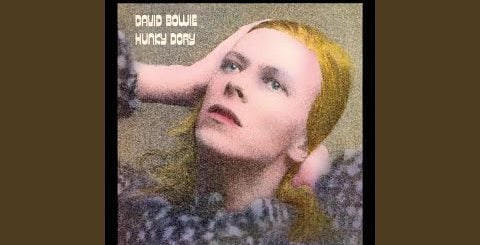
As the chameleonic troubadour of the rock world, David Bowie traversed the landscapes of music, art, and fashion with the effortless grace of a cosmic wanderer. Among the glittering constellation of his work, ‘The Bewlay Brothers’ stands as a resplendent riddle wrapped in a misty enigma. The track, culminating the sonic reverie of ‘Hunky Dory,’ is an evocative poem set to an elegiac tune.
Delving into the song’s labyrinthine corridors, we encounter spectral motifs, hauntingly bewitching language, and a mélange of personal, mythological, and cultural references, amounting to a mosaic as complexly beautiful as the man himself. An auditory feast that’s been dissected and savored by fans and critics alike; ‘The Bewlay Brothers’ evokes more questions than it answers, etching deep imprints in the veins of Bowie’s legacy.
An Ode to an Enigmatic Sibling Bond
Superficially, ‘The Bewlay Brothers’ could be perceived as a narrative surrounding David Bowie’s relationship with his half-brother Terry Burns, a figure who haunts much of Bowie’s oeuvre with tragic poignancy. The song’s layers peel away to reveal a tender, challenging, sometimes antagonistic relationship, requiring the listener to navigate the complexities of sibling bonds with care and contemplation.
Yet, as with most Bowie compositions, nothing is ever one-dimensional. The ‘brothers’ in the title could also symbolize disparate facets of Bowie himself – the public versus the private, the performer versus the introspective soul. Perhaps it is this duality that threads through the song, manifesting as ‘chameleon, comedian, Corinthian and caricature’.
The Bewlay Brothers’ Hidden Meaning: A Cultural Tapestry
‘The Bewlay Brothers’ is often viewed as a codex of obscurities, laden with references that could allude to Kierkegaard’s existentialism, the dadaist art movement, or even Bowie’s own prophetic vision of the glam rock culture. This track portrays the enigmatic battle with identity, presence, and performance in a world where truth and illusion collide and fuse in a kaleidoscopic dance.
Bowie’s lyrical mastery is at the zenith here, as he constructs a metaphysical playground that defies the listener to discern its core. Each verse stitches a new patch into the quilt, pulling from personal anecdotes, philosophical ponderings, and the embrace of countercultural sentiment that characterized Bowie’s time and personal ethos.
Standout Imagery: The Grim Face and the Moon Boys
The gritty lyric ‘Like the grim face on the cathedral floor’ paints Bowie’s auditory cathedral with a brooding stroke, suggestive of the gravity and permanence of stone. Paired with ‘It was stalking time for the moon boys’, we find ourselves awash in surrealistic scenes that marry earthly despair with celestial escapade, suggesting pursuits both sacred and profane within these brothers’ saga.
This duality between the sublime and the trivial pervades the song, creating a soundscape where human folly and ambition play out against a backdrop of universal vastness. Are we, the listeners, the ‘moon boys’, stalking the night in search of meaning, or are we the silent observers to Bowie’s own nocturnal journey?
The Poignant Plea: ‘Please come away, just for the day’
With its yearning chorus, ‘Please come away, just for the day’ operates on a haunting, persistently relatable level. This refrain embodies the human craving for escapism, from the claustrophobic grips of reality, seeking solace in an ephemeral paradise. The simplicity of this plea juxtaposed with the song’s complexity adds to the multidimensional experience of the track.
Is this an invitation or a desperate cry from Bowie to his audience, or perhaps to his loved ones, or even from one part of himself to another, seeking a respite from the torment of existence, from fame’s unyielding glare? In these words lies the universal desire to break free, if just momentarily, from the chains that bind us.
Memorable Lines That Echo Timelessly
‘In our wings that bark, flashing teeth of brass, standing tall in the dark’, the song unfurls its kaleidoscopic wings, birthing lines that dwell in a liminal space. These lines perpetuate a sense of bold confrontation and the glare of vulnerability, accentuating the contrast that Bowie so skillfully weaved into his work.
Decades on, the song resonates deeply in the canon of Bowie’s music, with its ability to transfigure personal narrative into a communal tapestry of reflections. It’s a song where one not only hears but feels the textures of existence, as vivid and enigmatic as the life of David Bowie himself.