The Ghost of Tom Joad by Bruce Springsteen Lyrics Meaning – An Anthem for the Voiceless and the Struggle for Social Justice
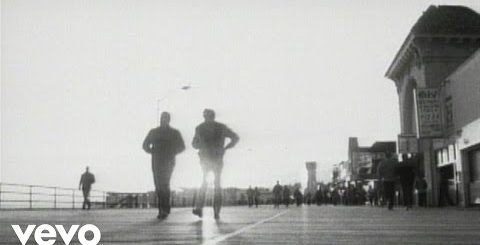
- Music Video
- Lyrics
-
Song Meaning
- Railroad Tracks to Nowhere: The Journey of the Disenfranchised
- A New World Order: Unpacking Springsteen’s Socio-Political Commentary
- The Ghost of Tom Joad: Unearthing the Song’s Core Spirit
- A Solemn Prayer and A Preacher’s Drag: Springsteen’s Narrative Craftsmanship
- Memorable Lines that Cut Deep into the American Psyche
Lyrics
Going someplace, there’s no going back
Highway patrol choppers coming up over the ridge
Hot soup on a campfire under the bridge
Shelter line stretching ’round the corner
Welcome to the new world order
Families sleeping in the cars in the southwest
No home, no job, no peace, no rest
Well the highway is alive tonight
But nobody’s kidding nobody about where it goes
I’m sitting down here in the campfire light
Searching for the ghost of Tom Joad
He pulls a prayer book out of his sleeping bag
Preacher lights up a butt and he takes a drag
Waiting for when the last shall be first and the first shall be last
In a cardboard box ‘neath the underpass
You got a one-way ticket to the promised land
You got a hole in your belly and a gun in your hand
Sleeping on a pillow of solid rock
Bathing in the city’s aqueduct
Go!
Well the highway is alive tonight
Where it’s headed everybody knows
I’m sitting down here in the campfire light
Waiting on the ghost of Tom Joad
Now Tom said, “Mom, wherever there’s a cop beating a guy
Wherever a hungry newborn baby cries
Where there’s a fight against the blood and hatred in the air
Look for me, Mom, I’ll be there
Wherever somebody’s fighting for a place to stand
Or a decent job or a helping hand
Wherever somebody’s struggling to be free
Look in their eyes, Ma, and you’ll see me”
Yeah!
The highway is alive tonight
Where it’s headed everybody knows
I’m sitting down here in the campfire light
With the ghost of old Tom Joad
The haunting refrain of ‘The Ghost of Tom Joad’ echoes through the annals of music as Bruce Springsteen’s vivid portrayal of American life amidst economic hardship and social injustice. The song is a complex tapestry woven with the themes of hope, resistance, and the enduring human spirit. Unpacking the layers of this narrative reveals the connection between the ‘everyman’ and the legacy of Tom Joad, a fictional character immortalized by John Steinbeck’s novel ‘The Grapes of Wrath.’
In its melodic storytelling, Springsteen ignites a conversation that transcends time, speaking as much to the issues of the present as it does to those of the Dust Bowl era. Grounded in a raw and unyielding reality, the song challenges the listener to confront the uncomfortable truths of society’s marginalization of the vulnerable and dispossessed. Through analysis, let us delve deeper into the heart of what makes ‘The Ghost of Tom Joad’ a poignant and ongoing dialogue about America’s soul.
Railroad Tracks to Nowhere: The Journey of the Disenfranchised
Opening with men walking along railroad tracks, Springsteen captures a sense of directionless movement, a metaphor for the marginal communities on an endless search for something just beyond their reach. There’s a palpable feeling of desolation as the song touches on the relentless pursuit of a promised land that ubiquitously seems to move further away with each step taken.
The mention of highway patrol, choppers, and campfire under the bridge isn’t merely scene-setting; it’s an intimate look into the lives of the homeless and the watched. These characters are surveilled and controlled, yet they continue to move forward, underscoring a resilience borne out of necessity.
A New World Order: Unpacking Springsteen’s Socio-Political Commentary
With a subtle nod to the shifting global landscape, ‘Welcome to the new world order’ isn’t just a refrain; it’s an indictment of the emerging societal norms that overlook the plight of the vulnerable. Springsteen sketches a world where families are relegated to living in cars, and the basic elements of survival – a home, a job, peace, rest – are unattainable luxuries.
The new world order represents a paradigm where economic and social systems favor the powerful, leaving a swath of humanity grappling for the scraps from the table of prosperity. Through this lens, Springsteen portrays an America caught in the throes of transformation, one that often forgets the faces that built its railways and roads.
The Ghost of Tom Joad: Unearthing the Song’s Core Spirit
Centerstage in the song is the ghost of Tom Joad, a symbol of moral fortitude and rebellion against injustice. Springsteen isn’t just searching for Joad’s ghost in the literal sense; he seeks the essence of Tom’s fight for equity, a quest that resonates with every listener who has ever felt the sting of inequality.
By invoking Tom Joad, Springsteen taps into a collective cultural memory, reviving Steinbeck’s archetypal hero as an everlasting figure of protest and defiance. It is a powerful reminder that the fight for justice is never truly over and that the spirits of those who stood for it continue to inspire new generations.
A Solemn Prayer and A Preacher’s Drag: Springsteen’s Narrative Craftsmanship
Through vivid imagery and masterful storytelling, Springsteen conjures a scene of the downtrodden finding solace in prayer and the bitter comfort of a cigarette. The juxtaposition of a prayer book and a ‘butt’ elicits a nuanced understanding of faith and hope amidst despair, elements that give the destitute the strength to face another day.
The lyric ‘Waiting for when the last shall be first and the first shall be last’ is a powerful biblical allusion that underscores the upside-down nature of social justice. It is a poignant commentary on the reversal of fortunes necessary to create a truly equitable world, a world that seems both within reach and yet so far for those beneath the underpass.
Memorable Lines that Cut Deep into the American Psyche
Occasionally, a song captures the imagination through a turn of phrase that feels larger than the sum of its parts. ‘Wherever there’s a cop beating a guy, Wherever a hungry newborn baby cries,’ these lines serve as a rallying cry that empathy and action are needed wherever and whenever injustice rears its head.
Springsteen channels the essence of Tom Joad, not just as a character but as a movement, a call to look into the eyes of the struggling and see the shared humanity that demands change. These memorable lines don’t just recount the adversities; they call on us to be present and to see ourselves as part of the solution.