The Last Resort by Eagles Lyrics Meaning – A Lament for Paradise Lost
Lyrics
Where the old world shadows hang heavy in the air
She packed her hopes and dreams like a refugee
Just as her father came across the sea
She heard about a place people were smilin’
They spoke about the red man’s way, how they loved the land
And they came from everywhere to the Great Divide
Seeking a place to stand or a place to hide
Down in the crowded bars out for a good time,
Can’t wait to tell you all what it’s like up there
And they called it paradise, I don’t know why
Somebody laid the mountains low while the town got high
Then the chilly winds blew down across the desert
Through the canyons of the coast to the Malibu
Where the pretty people play hungry for power
To light their neon way and give them things to do
Some rich man came and raped the land, nobody caught ’em
Put up a bunch of ugly boxes and, Jesus, people bought ’em
And they called it paradise, the place to be,
They watched the hazy sun sinking in the sea
You can leave it all behind and sail to Lahaina
Just like the missionaries did so many years ago
They even brought a neon sign ‘Jesus is Coming’
Brought the white man’s burden down, brought the white man’s reign
Who will provide the grand design, what is yours and what is mine?
‘Cause there is no more new frontier, we have got to make it here
We satisfy our endless needs and justify our bloody deeds
In the name of destiny and in the name of God
And you can see them there on Sunday morning
Stand up and sing about what it’s like up there
They called it paradise, I don’t know why
You call some place paradise, kiss it goodbye
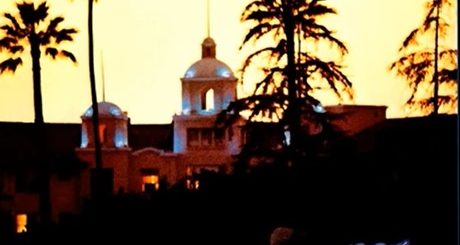
Within the pantheon of classic rock, ‘The Last Resort’ by Eagles stands as a solemn anthem that stretches beyond the confines of genre to touch upon a universal truth about human impact on the pristine. The poignant track, closing their 1976 album ‘Hotel California’, uses a painter’s touch, layering vivid imagery and haunting melodies to convey a message that’s both timeless and prophetic.
Delving beyond its lilting tune and the meticulously harmonized vocals that the Eagles are renowned for, ‘The Last Resort’ is an elegy to the American Dream seen through the lens of environmental degradation and cultural dissipation. It’s a narrative of how search for paradise leads to its destruction, serving as a mirror reflecting decades of societal choices and highlighting the irony of progress.
An Elegy to the Lost American Eden
The ballad’s opening verse introduces a woman who arrives from Providence with dreams and a heritage of seeking a new life in America. This story arch – of coming to a land promising freedom and opportunity – quickly unfolds into a broader commentary on the conquest and commodification of the American landscape, where manifest destiny collides with environmental and cultural exploitation.
The narrative paints the American journey as a cycle of hope and disillusionment, from the early settlers to the modern-day land developers. The ‘old world shadows’ and ‘refugee’ imagery evoke feelings both of nostalgia for what’s left behind and the dimming shadow cast over the new world’s future as it’s carved and parceled out for profit.
Whispers of the Red Man’s Wisdom Ignored
The Eagles make a point to detail the disconnect between the reverence indigenous peoples had for the land and the capitalistic approach adopted by those who followed. The ‘red man’s way’ and ‘love for the land’ stand in stark contrast to the selling off of American paradise, further reinforced by the melancholic line: ‘And they called it paradise, I don’t know why’.
The song suggests that the term ‘paradise’ has been grossly misused and abused by those who fail to see the true value of the natural world, instead measuring worth by economic gain. ‘Somebody laid the mountains low while the town got high’ could hardly be more succinct in its condemnation of the erosion of environmental stewardship.
Paradise Paved: Concrete Replacing Nature
Perhaps the song’s most gut-wrenching critique comes with the envisioning of development as a form of violence: ‘Some rich man came and raped the land, nobody caught ’em’. The ‘ugly boxes’ that populate the landscapes – the faceless, uninspired architecture of progress – replace the organic complexity of untouched landscapes.
Herein lies the dreary acknowledgement of complicity among the masses – not only did they allow this perversion of the environment, they actively participated in it, buying into the dream-turned-nightmare. The song serves as a sharp rebuke of consumer culture and its role in perpetuating the desecration of ‘paradise’.
The Inner Conflict: Religion as Colonizer’s Tool
One cannot overlook the role of religion, starkly exemplified in ‘Just like the missionaries did so many years ago’. The insertion of Western religious mores often comes paired with imperialistic undertones. In ‘The Last Resort’, missionaries with a neon ‘Jesus is Coming’ sign symbolize not just the spread of faith but also the advance of a foreign ideology designed to reshape an existing way of life.
It is this imposition of belief, coupled with the force of colonial power – the ‘white man’s burden’ morphing into the ‘white man’s reign’ – that hints at the deeper layers of the song’s narrative. The song is unafraid to implicate religious complicity in the damaging march of civilization.
A Bittersweet Requiem: Paradise and its Inevitable Kiss Goodbye
In the crestfallen conclusion of the song, the finality of the phrase ‘You call some place paradise, kiss it goodbye’ resonates with the listener, conjuring up the bitter truth that once a place is deemed ‘paradise’ it’s only a matter of time before it is swallowed up by the insatiable needs of human expansion and exploitation.
It is with heavy heart and a reflective mind that the song lingers on the ultimate question of ownership and purpose. Through ‘The Last Resort’, the Eagles poetically underscore a cycle of endless desire and rationalized destruction, prompting a contemplative pause on the very ideals that once made the pursuit of paradise seem so gloriously attainable.