The Wind Cried Mary by Jimi Hendrix Lyrics Meaning – Decoding a Psychedelic Poem of Loss and Regret
Lyrics
And the clowns have all gone to bed
You can hear happiness staggering on down the street
Footprints dressed in red
And the wind whispers Mary
A broom is drearily sweeping
Up the broken pieces of yesterday’s life
Somewhere a queen is weeping
Somewhere a king has no wife
And the wind, it cries Mary
The traffic lights they turn a blue tomorrow
And shine their emptiness down on my bed
The tiny island sags downstream
‘Cause the life that lived is, is dead
And the wind screams Mary
Will the wind ever remember?
The names it has blown in the past
And with its crutch, its old age and its wisdom
It whispers “No, this will be the last”
And the wind cries Mary
Amid a catalog bursting with explosive guitar riffs and acid-tinged sonic experiments, Jimi Hendrix’s ‘The Wind Cried Mary’ stands out as a tender, poetic ballad that speaks directly to the soul. On the surface, the song may seem like a mournful tribute to a lost love; however, beneath lies a tapestry woven with themes of change, disenchantment, and the ephemerality of life.
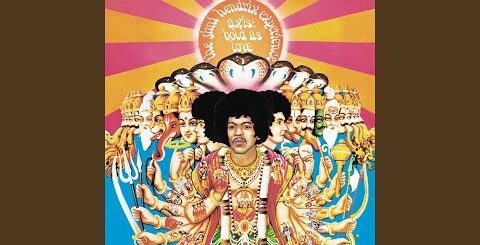
Released as a single in 1967 and later included on the US edition of ‘Are You Experienced’, Hendrix’s third single with the Jimi Hendrix Experience is as enigmatic as it is emotionally stirring. Its deeper meanings can be unraveled by closely examining its poignant lyrics, intriguing metaphors, and the personal history of the legendary guitarist.
Stratocasting Sorrow: The Emotional Landscape of Mary
The emotional weight carried by ‘The Wind Cried Mary’ is palpable from the opening lines. The image of jacks in their boxes and clowns gone to bed can be seen as symbols for the end of performance—a metaphor for the finish of a relationship or perhaps the conclusion of the day’s façades and the night’s cold reality setting in.
Through Hendrix’s somber intonations, we sense a narrative painted with regret. Happiness appears as something that can be heard ‘staggering on down the street,’ possibly suggesting that joy itself is fleeting, struggling to keep its composure as it drifts away, leaving only its ‘footprints dressed in red’ as a vivid residue of what once was.
Mary, Monarchs, and the March of Time
The lyrical stanza involving a weeping queen and a king without a wife introduces royal imagery to convey desolation and loss. It’s as though Mary herself may be that queen, and in her absence, the king — possibly Hendrix, a man admired by many as rock royalty — is left in a lonesome state.
This monarchy of mourning is backed by scenes of the ordinary, such as a broom sweeping broken pieces, a metaphor for attempting to clean up after the destruction left in the wake of a stormy relationship.
Deciphering the Dialogue of Gales: The Song’s Hidden Meaning
The recurring personification of the wind plays a pivotal role in fleshing out this song’s hidden meanings. Hendrix uses the wind as a chronicler of time and sorrow, carrying the names and memories of those lost, perhaps including Mary, as it whispers and screams throughout the verses.
It seems the wind itself carries the tales of the past but offers a sobering reality in its ‘old age and its wisdom,’ lending the track a sense of weariness with its continuous changes.
The Lament in Technicolor: Dissecting Hendrix’s Vivid Imagery
In a hue that alters the bustle of normalcy, the traffic lights ‘turn a blue tomorrow,’ casting a lonely glow upon the abyss of the protagonist’s bed, a moment encapsulating the dichotomy of an isolated sadness amidst a world that’s meant to be full of moving parts and people.
The ‘tiny island’ that ‘sags downstream’ might be the emblem of a personal refuge, a relationship or a momentary haven that’s been irreversibly carried away by the inexorable current of time, suggesting that what was once a sanctuary is now no more than a fleeting speck adrift in life’s river.
Memorable Lines: A Closer Look at the Poetry in the Melancholy
Lines like ‘And the wind whispers Mary’ capture a rare simplicity in the complexity of Hendrix’s songwriting. This quiet assertion becomes a powerful refrain, the song’s cornerstone, that embodies the sense of yearning and contemplation that pervades the track.
Similarly evocative is the pondering ‘Will the wind ever remember?’ which tugs at the listeners’ heartstrings as it confronts the impermanence of all things, including the memory of loved ones, emotions akin to the fading tendrils of a once powerful storm.