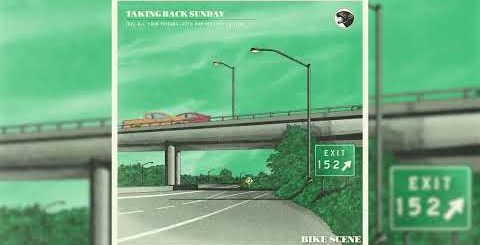
Up Against (Blackout) by Taking Back Sunday Lyrics Meaning – An Ode to Facing Life’s Relentless Struggles
Lyrics
Face it. This is what we’re up, up against.
You’re waiting. Every minute is a minute away. x 2
Regrets always work, excuses are better.
A practical exchange or a trade for the truth.
But you know it never held up.
Pretend that it still could now.
Face it. This is what we’re up, up against.
You’re waiting. Every minute is a minute away. x 2
We’re turning our clocks back.
Was never ourselves.
So go with the flow, just relax.
Never feel the jetlag unless you’re trying to fit in.
Face it. This is what we’re up, up against.
You’re waiting. Every minute is a minute away. x 2
Less is more except when it comes to mistakes
How long is long? That depends on how long it takes. x 2
The years. Not months. Not days. Your blackout memory.
Face it. This is what we’re up, up against.
You’re waiting. Every minute is a minute away. x 2
Taking Back Sunday, an emblem of the emo-rock wave that swept through the early 2000s, has always had a knack for tapping into the raw vein of youthful angst and world-weariness. Yet, even amid their extensive catalog, ‘Up Against (Blackout)’ stands out as a particularly intense foray into the ubiquity of internal and external conflict. The song, loaded with fervent energy and lyrical depth, invites a closer examination into its dense web of themes.
Balancing the signature emo urgency with a unique poetic clarity, ‘Up Against (Blackout)’ is a rallying cry that stitches together shared experiences of doubt, frustration, and the cyclical nature of human endeavor. Through its charged verses and haunting repetitions, the song begs listeners to peer into the abyss of their own struggles. Let’s delve into what lies behind this deceptively complex track and unearth the profound implications of its lyrics.
The Sisyphean Echo: Endless Battles with Time
The starting pistol of ‘Up Against (Blackout)’ fires with a sentiment of resilience against unseen adversaries. ‘So this is what we’re up against,’ the lyrics repeat, almost as a mantra. It’s a confrontation not just with the external world but with the relentless march of time itself. Each iteration of ‘You’re waiting. Every minute is a minute away,’ pulses with increasing urgency, emphasizing the frustration of anticipation and the helplessness in waiting for something—anything—to change.
This thematic struggle with time echoes the Sisyphean ordeal of constantly battling yet never quite triumphing. There’s a sense of being stuck in a loop, reinforced by the song’s cyclical structure, feeding into the audience’s own familiarity with the sensation of time slipping unproductively by.
Truth Trades and Excuses: A Bargain with Reality
The notion of an exchange between practicality and honesty—’Regrets always work, excuses are better,’—unfolds a dialogue about how truths are negotiated in day-to-day existence. It’s an allusion to the coping mechanisms that individuals deploy to interact with and survive reality. It also hints at the diminishing returns of these mechanisms as they ‘never held up.’
Taking Back Sunday forces listeners to confront the shaky edifice of their excuses and rationalizations, questioning the foundation of what they believe could still hold firm. It’s a raw reflection on the nature of regret and the ephemeral comfort of excuses we craft to shield ourselves from the often harsh verdicts of truth.
Against the Clock: The Futility of Rewinding
The attempt to ‘turn our clocks back’ speaks to an innate desire to revert to earlier times perhaps to correct past mistakes or relive forgotten joys. But in the vein of the song, it’s a futile effort, lamenting an impossibility that belies a broader message: a yearning for a simpler state—’Was never ourselves’—suggesting that the purity we seek or rue losing never truly existed.
‘Never feel the jetlag unless you’re trying to fit in,’ further encapsulates the conflict between moving with the flow of time or against it. It pinpoints the discomfort often felt when one grapples with their sense of self amidst the pressures to conform, which ultimately leads to feeling out of sync with one’s own timeline.
The Paradox of Simplicity: When Less is Tragically More
‘Less is more except when it comes to mistakes’—a haunting line that reverses a commonly embraced minimalistic sentiment, bringing to light the amplification of errors in life’s grand ledger. It’s a stark reminder that the economy of effort does not translate to an economy of consequences. The more we try to simplify, to strip back, the more glaring our missteps become.
And yet, the song also questions the notion of duration and permanence—’How long is long? That depends on how long it takes.’ It’s an incisive commentary on the subjective nature of time and how our perception of it is directly influenced by our experiences, particularly the grinding ones that remain with us far longer than we’d like.
Blackout Memories: The Retention and Erosion of the Past
The final verse of the song touches on the concept of ‘blackout memory,’—moments that are lost to the void of forgetfulness, either deliberate or unintentional. These lyrics could imply the idea of being blackout drunk, erasing unwanted experiences from consciousness, or a broader metaphor about the impermanence of memories and how they fade, leaving gaps in our personal histories.
In this context, memories—or lack thereof—become another ‘opponent’ in the ongoing struggle depicted in ‘Up Against (Blackout).’ It’s about the parts of our past that we can’t change, can’t remember, and sometimes, can’t even fully comprehend. The years lost to memory’s blackout—the good, the bad, the formative—shape us into who we are, even in their absence.