War on War by Wilco Lyrics Meaning – Decoding the Anti-Conflict Anthem for the Modern Age
Lyrics
It’s a war on war
It’s a war on war
It’s a war on war
It’s a war on war
It’s a war on war
It’s a war on war
There’s a war on
You’re gonna lose
You have to lose
You have to learn how to die
Just watching the miles flying by
Just watching the miles flying by
You are not my typewriter
But you could be my demon
Moving forward through the flaming doors
You have to lose
You have to learn how to die
If you want to want to be alive, okay?
You have to lose
You have to lose
You have to learn how to die
If you want to want to be alive
You have to die
You have to die
You have to learn how to die
If you want to want to be alive, okay?
Amidst the cacophony of protest anthems and the nuanced ballads that often punctuate the musical landscape, Wilco’s ‘War on War’ stands out as a deceptively simple yet deeply profound piece. At first glance, the repetition seems almost meditative, but Jeff Tweedy and his bandmates are not merely strumming along to a defeatist chorus; they’re etching a profound message into the bedrock of our consciousness.
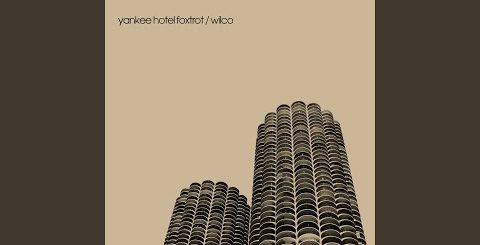
Steeped in the tumultuous origins of their 2001 album ‘Yankee Hotel Foxtrot,’ ‘War on War’ is a lyrical enigma that has invited listeners over the decades to peel back its layers. To the uninitiated, the track might come across as a paradox, but it is, in essence, a topical reflection of the complexities of human conflict and the philosophical musings on mortality and the essence of truly living.
The Repetition That Echoes The Futility of Conflict
The chant-like iteration of ‘It’s a war on war’ serves as a clarion call, highlighting the absurdity of fighting against fighting, a narrative that is almost Kafkaesque in nature. The song’s pendulous structure mirrors the inescapable loop of violence that humanity finds itself trapped in – each war purportedly waged to end all war, yet seeding the grounds for the next.
This circular turmoil is not lost on Wilco; it’s meticulously woven into the fabric of the song. The simplicity of the lyricism doesn’t undermine its impact but rather magnifies the message, demanding that we pay closer attention to the irony of our warmongering ways.
The Art of Dying as a Metaphor for Liberation
When Wilco asserts ‘You have to learn how to die if you want to want to be alive,’ they’re tapping into an existential well. It isn’t a literal encouragement of demise but an invocation to surrender – a surrender not to the enemy but to the egotistical constructs that bind us to the very concept of war. Death here signifies the end of old ways, old beliefs, and the birth of an awakened state that truly cherishes life.
This cryptic instruction is an urging to let go of the fear-driven impulses that lead us into endless cycles of conflict. To be truly alive, the song suggests, one must be ready to part with the parts of themselves that are already dead – the hatred, the prejudice, the unyielding pride.
Unlocking the Hidden Meaning Behind ‘Typewriter’ and ‘Demon’
The intriguing lines ‘You are not my typewriter / But you could be my demon’ are more than whimsical wordplay. In the digital age – far removed from the mechanical clacks of the typewriter – there persists the idea of perpetuating narratives of seeming importance. The typewriter signifies the old ways of communication, the demon perhaps a representation of the internal and external forces urging us to keep up this relentless march.
There is a duality at play where the ‘demon’ could be interpreted as both destructive and transformative, a necessary agent that propels us through the ‘flaming doors’ – doorways to painful, yet crucial, change.
Miles Flying By – The Ephemeral Nature of Existence
Wilco doesn’t let listeners rest on their philosophical laurels for long, as the haunting reminder that life’s journey is perennially in motion – ‘Just watching the miles flying by.’ Moving forward is not just a choice but an inevitability, and within this momentum, there is a finite span to correct course, to choose life over the war on war.
The refrain becomes both a lament and a meditation, encouraging a mindfulness of the present, insinuating that the act of observation is key to comprehending the transient beauty of our existence – a stark contrast to the typically destructive human engagements the song condemns.
The Reverberating Influence of Wilco’s Memorable Lines
As with many of Wilco’s creations, the haunting echoes of ‘War on War’ have rippled through time, cementing themselves in the lexicon of modern protest songs. ‘You have to lose / You have to learn how to die / If you want to want to be alive’ – these lines have been chanted at rallies, quoted in literary works, and have permeated introspective conversations about life’s worth.
The simplicity of the phrase belies its depth, and much like the poem ‘Do not go gentle into that good night’ by Dylan Thomas, it calls for a passionate, considered rebellion against the twilight of the soul – one that resonates a desire to fully embrace the vibrancy of being, even in the face of the ultimate darkness.