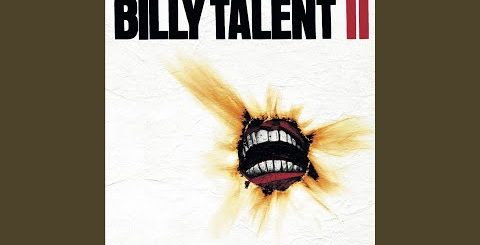
Worker Bees by Billy Talent Lyrics Meaning – Unraveling the Hive Mind Mentality in Modern Society
Lyrics
Know your enemy!
We take our orders given by the queen
We’re not the killers, we’re the worker bees
If you resist us you will feel our sting
Surrender now before the swarm sets in
Protect the hive from enemies!
Protect the hive from enemies!
Follow the herd mentality!
Can we fight to save our souls?
March on, worker bees!
Know your enemy!
A pollination coming from the west,
And in a flash we will invade your nest
Supply of honey flowing bottomless
Play by our rules or you’ll be powerless
Protect the hive from enemies!
Protect the hive from enemies!
Follow the herd mentality!
Can we fight to save our souls?
And we’ll march… along, with our blindfolds on
And we’ll ride… the rails, with our pistols drawn
Can the Lord… above, forgive what we’ve done?
Can we fight to save our souls?
And we’ll march… along, with our blindfolds on
And we’ll ride… the rails, with our pistols drawn
Can the Lord… above, forgive what we’ve done?
Can we fight to save our souls?
Can we fight to save our souls?
Will we die to save our home?
Billy Talent’s ‘Worker Bees’ resonates with the piercing buzz of collective consciousness and the clatter of dissension within the ranks. The song, which infuses Billy Talent’s signature punk rock vitality with a burning societal message, acts as an anthem for the disillusioned and a clarion call for personal awakening.
At its core, ‘Worker Bees’ is an audacious critique of the conformity and subservience that characterize our globalized hive mentality. Through a closer examination of the song’s poetic lyrics, we begin to unfold a layered narrative that speaks to the struggle between individual autonomy and collective identity.
The Queen’s Command: Obedience or Defiance?
The opening lines of ‘Worker Bees’ immediately establish the societal hierarchy—’We take our orders given by the queen.’ This queen is a metaphorical figure embodying authority and the demands it places on its subjects. In the context of the song, the worker bees symbolize laborers and the common populace, highlighting the pervasive power dynamics at play.
The narrative boldly questions the legitimacy of authority—imploring listeners to consider whether their compliance is born out of genuine consensus or compelled by the fear of retribution, echoing the sting of the bees. It’s an evocative image that stirs the listener to reflect on personal complicity within a repressive system.
Pollen of Propaganda: The Invasion of Ideals
Billy Talent sketches a geopolitical landscape with ‘A pollination coming from the west, and in a flash we will invade your nest.’ This robust metaphor for western influence not only alludes to cultural imperialism but also to the subtle, continuous spread of ideologies that come to dominate and define our lives.
The suggestion is that like a vast, irresistible current, these influences alter the landscape of our personal and social environments as irrevocably as a swarm taking over a rival hive. The band’s message is clear: awareness is crucial to discern and resist the insidious infiltration of dominance under the guise of provision and protection.
Herd Mentality: The Illusion of Unity
One of the song’s refrains, ‘Follow the herd mentality,’ captures the tension between communal identity and the loss of individual thought. Through this stark phraseology, ‘Worker Bees’ unpacks the perils of conflating unity with uniformity—the suppression of dissent in favor of an unchallenged, monolithic culture.
By casting a light on the herd mentality, the song engenders a dialogue on the fine line between societal cohesion and mass manipulation. Billy Talent underlines the notion that true harmony does not arise from the dulling of senses and the blind following of orders.
Revealing the Hidden Meaning: A Reflection on Salvation
A piercing self-reflection is encapsulated in ‘Can the Lord above, forgive what we’ve done?’ The song confronts the ethical quandaries of our actions within systems we might oppose yet uphold. It’s a deeply personal reckoning with one’s complicity and the quest for moral absolution in a world where lines are often blurred.
Worker Bees’ plunges the listener into this conundrum—weighing societal duty against personal morality. It prompts a fundamental inquiry into the possibility of redemption, whether divine or self-forged, amidst the actions undertaken in the name of the collective.
Memorable Lines: The Chorus That Haunts
The emotive potency of ‘Worker Bees’ culminates in the recurring, haunting lyric ‘Can we fight to save our souls?’ It is a line that stays with the listener long after the music fades. It channels the internal conflict between surrendering to larger forces and resisting to preserve something deeply personal—our very souls.
By repeating this line, Billy Talent hammers home the gravity and urgency of maintaining one’s integrity in the face of overwhelming societal pressures. This memorable line crystallizes the song’s essence, encapsulating the universal and timeless struggle against the forces that seek to shape and define us.