You Know What They Do to Guys Like Us in Prison by My Chemical Romance Lyrics Meaning – Dissecting Rebellion and Camaraderie in Punk Anthems
Lyrics
In the center of a restaurant
They say, come with your arms raised high
Well, they’re never gonna get me,
And like a bullet through a flock of doves
To wage this war against your faith in me
Your life, will never be the same
On your mother’s eyes, say a prayer say a prayer
Now, but I can’t
And I don’t know
How we’re just two men as God had made us
Well, I can’t, well, I can
Too much, too late, or just not enough of this
Pain in my heart for your dying wish
I’ll kiss your lips again
They all cheat at cards and the checkers are lost
My cellmate’s a killer, they made me do push-ups (in drag)
But nobody cares if you’re losing yourself am I losing myself
Well, I miss my mom
Will they give me the chair
Or lethal injection, or swing from a rope if you dare
Ah, nobody knows all the trouble I’ve seen
Now, but I can’t
And I don’t know
How we’re just two men as God had made us
Well, I can’t, well, I can
Too much, too late, or just not enough of this
Pain in my heart for your dying wish
I’ll kiss your lips again
To your room
What they ask of you
Will make you want to say, so long
Well, I don’t remember
Why remember you
Do you have the keys to the hotel
‘Cause I’m gonna string this motherfucker on fire (fire)
Life is but a dream for the dead
And well I, I won’t go down by myself
But I’ll go down with my friends
Now now now now, now now now, now now now, yeah
Oh, oh, oh, oh, oh, oh
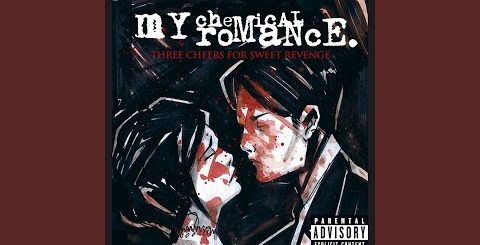
My Chemical Romance has never been a band to shy away from the darker crevices of the psyche, intertwining tales of woe with the exuberant, defiant energy of punk-inflicted rock. ‘You Know What They Do to Guys Like Us in Prison,’ a track from their iconic 2004 album ‘Three Cheers for Sweet Revenge,’ is no exception – a tour de force that delves deep into themes of rebellion, incarceration, and existential dread.
Below the surface of the song’s aggressive guitar riffs and anthemic melodies lies a complex narrative, one that explores the intimate struggle between personal identity and society’s harsh judgments. This in-depth analysis pieces together the cryptic messages and emotive storytelling embedded within the lyrics, offering an elucidation furnished with both literary and real-world contexts. Let the disruptive chords guide us through this exploration of rebellion, desperation, and companionship amidst the most dire circumstances.
Behind Bars of Melody: The Narrative Core of ‘Prison’
The song opens amid violence – a scenario involving a gun fight in a restaurant, immediately establishing a theme of confrontation. The surrendering stance, ‘come with your arms raised high,’ is defiantly rejected, hinting at the song’s overarching narrative of resistance. This opening salvo works in perfect harmony with the song’s aggressive instrumental backdrop, mirroring the chaos of being caught in the grip of societal mechanisms.
Here, ‘You Know What They Do to Guys Like Us in Prison’ is not merely a commentary on literal incarceration but rather a broader metaphor for being trapped by societal norms, the expectations of faith, and potentially, the merciless music industry. It’s an uprising cry on behalf of those who feel confined by forces beyond their control.
The Clash of Divinity and Humanity Under Scrutiny
Intertwined within the song’s fabric are reflections on the nature of men ‘as God had made us.’ This theological probing is not for divine enlightenment but rather to stress the innate humanity within us all, regardless of how society may brandish certain individuals as miscreants or outcasts.
However, the surrender expressed in the chorus, ‘I can’t’, eventually morphs into an affirmation of being able to endure – ‘Well, I can.’ It’s a battle cry asserting the resilience of the human spirit even when confronted with unendurable pain, a pain characterized by the emotive plea resounding in a ‘dying wish’.
Injustice and Absurdity Painted in Stark Imagery
The vivid descriptions of life behind bars, playing cards, and checkers are juxtaposed with the more surreal, ‘my cellmate’s a killer, they made me do push-ups (in drag).’ It removes the listener from typical punk anthemia into a space of dark humor and absurdity, echoing the tragicomic aspects of humanity.
This approach to tackling serious themes with a blend of morbid humor and surrealism is indicative of My Chemical Romance’s style, offering listeners a layer of detachment to explore uncomfortable subjects without becoming consumed by them.
Uncovering the Hidden Despair in Cathartic Release
Perhaps the most poignant moment comes with the raw confession of ‘Well, I miss my mom,’ followed closely by the macabre contemplation of the protagonist’s fate – the chair, lethal injection, or a noose. This starkness is a masterful emotional pivot, connecting the listener to the elemental human need for comfort, love, and the fear of loss – themes that resonate at the core of every person’s being.
Furthermore, this transparency is a stark reminder of the loneliness that can accompany defiance and the often unspoken despair that can lurk beneath the surface of a so-called ‘rebel’. It’s in these layers that the song finds its true emotional depth, resonating with an audience that has come to expect such authenticity from My Chemical Romance.
The Rallying Cry of Memorable Lines: Companionship in Defiance
In its climactic moments, the song serves up one of its most memorable lines, ‘Life is but a dream for the dead.’ This line encapsulates the somber acknowledgment of life’s transient nature and the resilience in the face of existential dread – an acceptance of reality skewed with a fatalistic yet strangely comforting perspective.
The concluding sentiment, ‘But I’ll go down with my friends,’ unearths the song’s hidden bedrock: camaraderie. It’s a powerful statement about standing by each other, even as the world seems to be crashing down. It’s an unyielding bond, arguably as central to the human condition as the love and loss earlier expressed, evoking a sense of unity in the shared struggle against life’s repressive forces.