Deep Deep by Have a Nice Life Lyrics Meaning – Unearthing the Existential Echoes in Modern Music
Lyrics
They do not realize, and we can’t blame them
Art as a means of escape, they don’t see the down-side
And that’s what takes them
Out on the floor
One stretches out it’s hands
Into the small of a back
And as they circle the room, as they circle the floor
One just wants it more
Well, they don’t want, anymore
You can sleep in these hollows and rivers
Exalt the righteous and drown the sinners
Jesus christ
Jesus christ, why is love so lonely
All water on earth
Evaporates into steam and erupts from the ground
Does anyone else feel guilty?
Like I did it all myself
One feels a lack of love and there’s no limit
To the explosive power of this bomb
How do we reconcile our deaths
We’d better figure it out before long
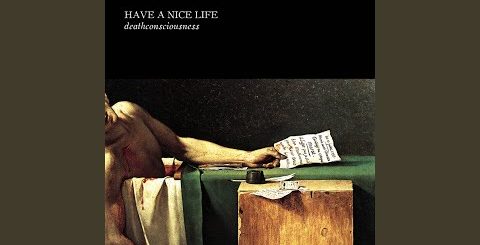
At the crux of our modern existential musings, we come upon ‘Deep Deep’ by Have a Nice Life – a haunting ensemble that deftly stirs the soul. This track, shrouded in atmospheric soundscapes and piercing lyrics, does more than resonate; it implores listeners to confront the very fabric of existence.
Art isn’t merely a form of expression but a landscape for exploration – ‘Deep Deep’ is a testament to this creed. As we dissect the strata of the song’s powerful lyrics, we find solace in its unflinching portrayal of life’s impermanence and the paradox of human emotion.
Atoms and the Artifice of Existence
The lyrics begin with a profound statement: ‘These atoms are liars.’ This potent metaphor implies that our very being – at the atomic level – is incapable of recognizing its role in the grander scheme. Have a Nice Life taps into this narrative of existential deceit, where the fundamental elements of life refuse to acknowledge their transience.
Much like art, the atoms symbolize an escape, a reality detached from the inevitable. Through the depiction of dance and movement, ‘Deep Deep’ conjures a poignant visual where the denial of reality leads to an almost desperate clinging to moments of pleasure and connection.
The Dance of Desperation and Desire
The imagery of dancers is invoked to underscore a relentless pursuit of meaning through physical connection. It places the listener within the existential waltz on the dance floor, where every stretch of a hand towards another person is a futile attempt to grasp more of what is fleetingly there.
The poetic repetition, ‘One just wants it more – Well, they don’t want, anymore,’ plays upon the paradox of human longing. It suggests a tipping point where the craving for connection is eclipsed by the recognition of its futility, leaving the dancers in a void of disillusionment.
The Resonance of Religious References
With the invocation of religious imagery, ‘Deep Deep’ delves deeper into the quest for spiritual and emotional absolution. The lyrics speak of hollows and rivers, Saints and sinners, with a palpable cry – ‘Jesus Christ, why is love so lonely?’
In this questioning of divinity, there is a raw confrontation with the solitary nature of love – the lyrics question the existential price of seeking solace in spirituality when it offers no immediate respite from the innate loneliness of the human condition.
The Guilt of Being and the Bomb of Love
The words ‘Does anyone else feel guilty? Like I did it all myself’ cut through the narrative, revealing a personal accountability that exceeds the individual. There is a confession of guilt intertwined with the essence of being, as if by simply existing, one is complicit in the chaos of the world.
Moreover, love is likened to a bomb with limitless explosive power, a dangerous duality that both intoxicates and annihilates. It suggests that love’s true force is not wholly understood until one experiences its potential for both creation and destruction.
Reconciling Mortality and the Ultimate Quest
The closing lines of ‘Deep Deep’ leave us contemplating our mortality: ‘How do we reconcile our deaths?’ There’s an urgency in this rhetorical question that seeks resolution. The song challenges listeners to confront the inevitability of death and to find meaning before it’s too late.
The line ‘We’d better figure it out before long’ resonates as a clarion call to listeners. This is the macabre undercurrent of the song – a reminder of the ticking clock of existence and a push for introspection and understanding of one’s life before the final silence.