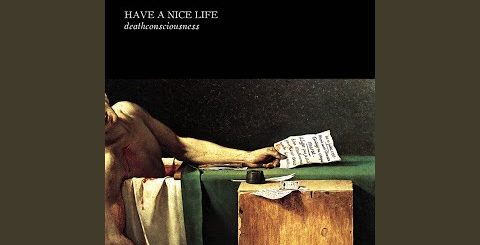
Who Would Leave Their Son Out in the Sun? by Have a Nice Life Lyrics Meaning – A Deep Dive into Existential Grief
- Music Video
- Lyrics
-
Song Meaning
- An Unflinching Gaze into the Abyss: The Song’s Overarching Despair
- Deconstructing Divine Ambivalence: A Critique of Celestial Bystanders
- The Existential Standstill: Pushing Against the Immovable
- Finding Redemption on the Cross: A Symbol of Suffering and Transformation
- From Denial to Decision: The Memorable Ultimatum
Lyrics
It’s time that all these things that I wish I could forget join in the ranks of things I regret.
But there aren’t enough archangels in the sky to come down to make me feel right.
I’m miserable whenever I think of it and I think of it all the time.
You could part their feathered wings and have your way with them just like you do to all of us all the time.
What point is there in pushing on, when all you push against is a brick wall?
Everyone spends some time on the cross, I just want to make sure it’s not a total loss, so maybe I’ll get tanned and lose some weight while I wait.
Everyone spends some time on the cross, I just want to make sure it’s not a total loss, so, deny me three times, or hurry up and fucking decide.
Have a Nice Life’s ethereal track ‘Who Would Leave Their Son Out in the Sun?’ reverberates with an eerie poignancy that is capable of haunting the recesses of our minds long after the final chords drift away. At first listen, the song may present itself as an enigmatic blend of post-punk and shoegaze, but beneath the surface, it’s a vessel brimming with existential agony and sorrowful introspection.
This poetic and despairing anthem navigates through the labyrinth of resignation and grim acceptance. It requires a delve deeper into the soul of its lyrics, which paint a picture both bleak and striking, to uncover the profound reflections on life, struggle, and the quest for meaning amidst an often cruel existence.
An Unflinching Gaze into the Abyss: The Song’s Overarching Despair
The song’s haunting introduction sets the stage for a dive into the existential void. The plaintive melody lures listeners into facing uncomfortable truths about persistence and regret. The notion that actions, no matter how meaningful in the moment, eventually succumb to the past suggests a universal human struggle against the relentless march of time.
Regret is anthologized with past actions, aligning them as parallel lines that never meet but exist in constant tension. The inability to derive comfort, even from celestial forces like archangels, intensifies the song’s emotive impact, encapsulating a sense of helplessness deeply resonant with anyone who’s ever reached for solace in the seemingly indifferent universe.
Deconstructing Divine Ambivalence: A Critique of Celestial Bystanders
One can’t help but confront the stark representation of divine entities rendered powerless or indifferent. When the song speaks of parting ‘their feathered wings’ in a sacrilegious act of control and subjugation, it echoes a profound disillusionment with higher powers and the betrayal of divine protection that many seek.
This imagery serves as a scathing commentary on the part of existence that is often untamed by prayers or faith. It amplifies the isolation of the self in an uncaring cosmos, where suffering is relentless and escape is but a whimsical fantasy.
The Existential Standstill: Pushing Against the Immovable
The ballad conveys the Sisyphean ordeal of toiling against insurmountable barriers. The ‘brick wall’ becomes a metaphor for the futility of effort in the grand scheme, a universal barrier that halts progress and smothers hope. This struggle is painted not as a noble pursuit but as an exhausting, purposeless endeavor.
There’s an aching resonance to questioning the very essence of pushing forward when every push is met with the cold, hard surface of reality. It grips listeners with the existential dread of the futile struggle, echoing the inner thoughts of those who have ever felt defeated by life’s relentless opposition.
Finding Redemption on the Cross: A Symbol of Suffering and Transformation
The song’s repeated reference to ‘spending some time on the cross’ weaves a biblical underpinning into an otherwise bleak tapestry. Yet, this is no embracing of martyrdom but an exploration of suffering’s potential to enact change—a transformation, minor as it might be, in facing the crucible.
The desire to ‘get tanned and lose some weight’ while ensnared in life’s agonies is an apostrophe to finding some semblance of redemptive value amid pain. It suggests resilience, a need to derive even the smallest gain from situations of profound distress, hinting at an undercurrent of dark humor in the existential narrative.
From Denial to Decision: The Memorable Ultimatum
The song’s closing lines introduce the familiar narrative of Saint Peter’s denial of Jesus, casting listeners into a state of anticipatory crossroads. The challenge to ‘deny me three times or hurry up and fucking decide’ becomes a bleak outcry for resolution, a petition for clarity in the murky waters of existence.
This closing plea is a raw demand for authentic engagement with reality. It speaks to the heart of human impatience and desire for a definitive stance in the face of ambiguity. The tonality’s shift from philosophical rumination to bitter urgency encapsulates the essence of a soul yearning for, if not salvation, then at least a concrete recognition of its plight.