Let’s Save Tony Orlando’s House by Yo La Tengo Lyrics Meaning – Unraveling the Tracks Behind the Music
Lyrics
The state fair marquee reads
Inside, a thousand people
With yellow ribbons, sing
And clap on one and three
Watch him burn
He’s dropping to his knees
Watch him burn
A medley, hits from Grease
Watch him burn
He never fails to please
Meanwhile in Taho, outside Casa Tony
Wetting rags in gasoline
A jealous Frankie Valli says
“Dawn, I want you back”
Lights a match and counts to three
Watch it burn
Reluctantly, he leaves
Watch it burn
Acrid smoke making him wheeze
Watch it burn
Humming, “Sherry” splits the scene
Watch it burn
Reluctantly, he leaves
Watch it burn
Acrid smoke making him wheeze
Watch it burn
Humming, “Sherry” splits the scene
We’re sorry to inform you
Tony Orlando has been postponed
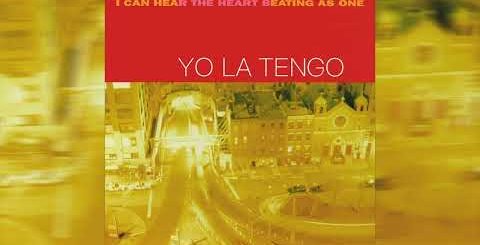
Yo La Tengo’s ‘Let’s Save Tony Orlando’s House’ spins a yarn that might at first listen seem steeped in absurdist humor. The track emerges from their eighth studio album, ‘And Then Nothing Turned Itself Inside-Out,’ which itself is a deep dive into sentimental storytelling and sonic exploration. At its surface, the song appears to be a surreal tribute to an era lost, but further inspection reveals a complex tapestry of nostalgia, irony, and critique.
Despite its whimsical title, the song is not so much about Tony Orlando, the celebrated ’70s pop icon, or the literal act of saving his house. Rather, it is a vehicle for the band to contrast star-spangled happily-ever-afters with the darker underbelly of celebrity and the ephemeral nature of success. The seemingly nonsensical scenario set around Tony Orlando’s house paints an allegory of the American Dream, with all its glitter and inevitable decline.
The Curtain Rises on Americana
The track kicks off with a scene that could have been lifted from any state fair across 1970s America, complete with eager fans clutching yellow ribbons—a nod, perhaps, to Orlando’s hit ‘Tie a Yellow Ribbon Round the Ole Oak Tree.’ But instead of warm nostalgia, the song swiftly introduces a disheartening sense of spectacle and disillusionment, as if revealing that beneath the surface, the wholesome American tableau is not quite as it seems.
The enthusiastic clapping on the off-beats, ‘one and three’, which is typically considered uncool by music aficionados, serves as an ironic juxtaposition against the cool image that rock musicians like Yo La Tengo themselves strive to project. This odd clapping pattern subtly insinuates a disconnection between the public’s understanding and the artists’ intentions, hinting at a larger commentary about cultural and generational gaps.
Igniting the Flares of Jealousy and Revenge
While Tony Orlando ‘burns’ on stage, as if sacrificing himself for entertainment, we are taken to a darker scene outside his home. The insertion of Frankie Valli, another iconic pop figure known for hits like ‘Sherry,’ into a tale of vengeful arson, seems almost ludicrous. Yet, Valli’s act of ‘wetting rags in gasoline’ symbolically lights the fire of rivalry that often exists unseen in the entertainment industry.
The exaggerated drama amplifies the absurdity of the perceived glitz and glamor of stardom. Behind the velvet curtains and platinum records lies a world fraught with envy and the lengths individuals will go to reclaim lost fame or love. Valli’s action and his subsequent retreat—’Humming,
The Metaphorical House and its Cryptic Fall
Orlando’s house is more than a structure of bricks and mortar; it stands as an edifice to his career, to the ephemeral nature of success in show business, and by extension, to every individual’s personal ambitions. As Valli ignites the flame, the act symbolizes how fame can be both a beacon and a destructive force. The song becomes a meditation on the delicate balance between soaring popularity and the potential for downfall that each celebrity—or indeed any success-fueled individual—faces.
The ‘house’ may also stand in for the home of American pop culture, which Yo La Tengo is in part seeking to ‘save’ from the forgetfulness of history. By immortalizing this bizarre story within their song, they ensure that the once-luminous stars of Orlando and Valli do not fade away, their legacies reduced to mere footnotes.
Album’s Archetype: Reflecting the Soundscape of an Era
Not only does the content of ‘Let’s Save Tony Orlando’s House’ echo back to a bygone epoch, but its structure and soundscape also reflect the music of the time it alludes to. The laid-back vocals, unassuming instrumentation, and understated melancholy evoke the feeling of a classic record playing on a well-worn turntable, triggering a haunting sense of nostalgia.
The simplicity of the musical arrangement allows the lyrics to take center stage, much like the stripped-down productions of many singer-songwriter records from the 1970s. In this contextual homage, Yo La Tengo pays respect to the sonic qualities that once defined an entire musical generation, while using modernist irony to put their own twist on the narrative.
Unearthing the Song’s Hidden Message
Beneath the track’s superficial oddity lies a sharp critique of contemporary society’s obsession with pop culture and the fleeting nature of fame. Yo La Tengo’s lyrical journey through the world of past heartthrobs subtly deflates the myth of perennial stardom while simultaneously achieving a level of immortality for these personalities in the very act of singing about them.
As the ashes settle on the smoldering remains of Orlando’s house, the song’s concluding line—’We’re sorry to inform you/Tony Orlando has been postponed’—serves as a final twist. It simultaneously captures the anticlimax of postponed fame and the humor in the banality of the announcement. The message, redolent with irony, leaves listeners to dwell on the realities of glory, its deferral, and ultimately its decline.