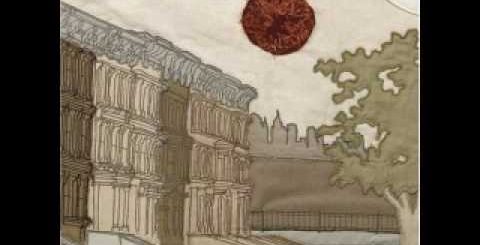
Nothing Gets Crossed Out by Bright Eyes Lyrics Meaning – Unraveling Connor Oberst’s Lyrical Labyrinth
Lyrics
My head is a carousel of pictures.
The spinning never stops.
I just want someone to walk in front and I’ll follow the leader.
Like when I fell under the weight of a schoolboy crush.
I started carrying her books and doing lots of drugs.
I almost forgot who I was, but came to my senses. Now I try to be assertive.
I’m making plans.
I want to rise to the occasion, yeah, meet all of their demands.
But all I do is just lay in bed and hide under the covers.
I know I should be brave but I’m just afraid of all this change.
It’s hard to focus through all this doubt.
I keep making “To Do” lists but nothing ever gets crossed out.
Even working on the record seems pointless now. When the world ends, who’s gonna hear it?
But I try and take some comfort in written words, yeah Tim I heard your album and it’s better than
good.
When you get off tour I think we should hang and black out together.
Because I’ve been feeling sentimental for days gone by…
all those summers singing, drinking, laughing, wasting out time.
Remember all those songs and the way we smiled in those basements made of music.
But now I’ve got to crawl to get anywhere at all. I’m not as strong as I thought.
So when I’m lost in a crowds, I hope that you’ll pick me out.
Oh, how I long to be found.
The grass grew high. I
laid down.
Now, wait for a hand to lift me up, help me stand.
I have been laying so low don’t want to lay here no more.
I But if everything that happens is supposed to be and it is predetermined, you can’t change your destiny.
Then I guess I’ll just keep moving and someday, maybe, I’ll get to where I’m going.
Connor Oberst of Bright Eyes has long been a master of confessional songwriting, weaving together intricate tales of despair, hope, and existential dread. ‘Nothing Gets Crossed Out’ stands as a testament to the power of Oberst’s pen, a stream of consciousness that spills out into a striking commentary on life’s overwhelming nature. The track, hailing from the band’s 2002 album ‘Lifted or The Story Is in the Soil, Keep Your Ear to the Ground,’ is a lyrical journey through self-doubt, nostalgia, and the relentless march of time.
Draping melancholic melodies with deeply personal lyrics, Oberst captures a sense of inertia felt in both his personal life and the broader scope of human experience. This exploration opens a window into the overwhelming challenges of modern living—questioning one’s place, pining for the past, and confronting the shadow of a seemingly apocalyptic future.
The Carousel of the Mind: Demystifying Mental Struggles
The song’s opening lines immediately plunge the listener into a vivid description of anxiety: ‘The future has got me worried, such awful thoughts. My head is a carousel of pictures. The spinning never stops.’ Oberst articulates this state of overthinking effectively, evoking an image of a mind relentlessly bombarded by images and scenarios, which feeds into a cycle of concern and fear about what lies ahead. This metaphor speaks to anyone familiar with the paralyzing grip of anxiety and the craving for direction in the chaos of the mind.
This admission opens the floodgates to a candid acknowledgment that despite a desire for leadership and a strong direction, oftentimes individuals find themselves floundering. In a culture that prizes assertiveness and action, the pressure of this expectation can foster the exact inertia Oberst describes. Individuals become stuck and the ‘spinning never stops,’ becoming an ever-present background noise that disrupts productivity and personal growth.
A Nostalgic Yearning for Simpler Times
Touching on nostalgia, ‘Nothing Gets Crossed Out’ harkens back to the uncomplicated days of youth—a common thread in Bright Eyes’ discography. The evocative ‘schoolboy crush,’ the books, the drugs, and ‘those summers singing, drinking, laughing, wasting our time’ are all vivid pictures painted with a bittersweet brush. These memories serve as a refuge for Oberst as he faces the complexities and demands of adulthood.
It is in this yearning that we find the universal longing for a return to simpler times. Oberst demonstrates that it is not just the loss of these carefree days that aches, but the acknowledgment of their impermanence. The songs and laughter that filled basements have passed, leaving a shadow—a memory—that’s clung to as both a source of pain and comfort.
Facing the Inevitability of Change with Fear and Resignation
The line ‘I know I should be brave but I’m just afraid of all this change’ embodies a universal sentiment. Oberst captures the hesitancy that accompanies the thrust into change, whether it be personal evolution or a global reshaping. His voice becomes the collective inner monologue for anyone facing the daunting task of adaptation, the internal debate between the comfort of the known and the uncertainty of the new.
With the reference to an apocalyptic world, the song parallels personal upheaval with global or existential crises. Oberst confronts the notion of futility that can arise in the face of such overarching threats—what is the point of creating, of striving, if the future is uncertain, if ‘the world ends, who’s gonna hear it?’ There’s both a deeply personal and a profoundly collective defeat acknowledged here, linking individual angst with that of the global consciousness.
Discovering the Hidden Meaning Behind ‘Nothing Gets Crossed Out’
At its core, ‘Nothing Gets Crossed Out’ is a dialogue about purpose and productivity in life against the backdrop of existential dread. The ‘To Do’ lists that ‘never gets crossed out’ are emblematic of the pervasive sense of stasis that can afflict one’s drive and determination. There is a constant battle between the aspiration to ‘rise to the occasion’ and the seductive lure of inertia, of simply ‘laying in bed’ and seeking escape from the weight of existence.
But there is much more nestled within the lines of this song. The listlessness is juxtaposed with an enduring hope and a relentless push forward—’I guess I’ll just keep moving,’ Oberst sings. Despite the futility and the fear, he identifies that there is no choice but to keep marching on, suggesting that in the ceaseless act of moving, perhaps there is meaning to be found after all.
Memorable Lines That Weave the Struggles of an Era
‘The grass grew high. I laid down. Now I wait for a hand to lift me up, help me stand.’ These lines strike at the heart, serving as a poetic embodiment of a generation battling passivity and the paralysis of choice. They represent the wait for intervention, external or internal, that might help break the cycle of stagnation—a sentiment that resonates for those navigating the complexities of modern life.
Extracting these snippets from Oberst’s tapestry of lyrics, it becomes glaringly clear that ‘Nothing Gets Crossed Out’ is not just a song, but a generational anthem of sorts. It encapsulates the voice of those caught between a desired direction and the reality of an ever-present past, against a world that’s constantly, inexorably changing.