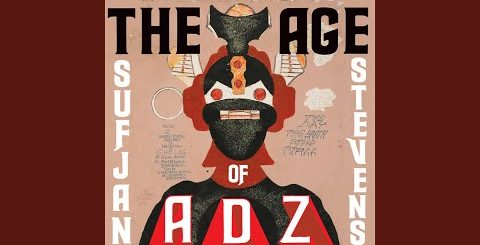
O Come O Come Emmanual by Sufjan Stevens Lyrics Meaning – A Soulful Exploration of Longing and Liberation
Lyrics
O come o come Emmanuel
And ransom captive Israel
That mourns in lonely exile here
Until the Son of God appears
Rejoice, rejoice, rejoice
Rejoice, rejoice, rejoice
O come, Thou day spring, come and cheer
Our spirits by Thine advent here
Disperse the gloomy clouds of night
And death’s dark shadows put to flight
Rejoice, rejoice, rejoice Emmanuel
And ransom captive Israel
Rejoice, rejoice, rejoice
Rejoice, rejoice, rejoice
O come, o come, Thou Lord of mights
Who to Thy tribes on Sinai’s height
In ancient times didn’t give the law
In cloud and majesty and awe
Rejoice, rejoice, rejoice
Rejoice, rejoice, rejoice
Rejoice, rejoice, rejoice
Rejoice, rejoice, rejoice
Sufjan Stevens, known for his poetic artistry and aching sincerity, casts a reverent glow on a historical hymn in his rendition of ‘O Come O Come Emmanuel.’ This isn’t just another Christmas carol cover — it’s a thoughtful re-imagination that speaks to the profound depths of the human condition. Stevens infuses new life into the ancient chants, turning them into a hauntingly beautiful narrative that resonates far beyond the holiday season.
While ostensibly centered around the advent season, this evocatively performed arrangement is imbued with universal themes of hope, anticipation, and redemption. Layered with Stevens’s ethereal vocals, each verse becomes a vessel carrying the weight of collective longing, individual suffering, and the timeless quest for divine intervention.
A Captive’s Cry: The Echoes of Ancient Israel
The song, originally a Gregorian chant, captures the yearning of the Israelites for the promised Messiah. Stevens’s interpretation, however, extends this context to speak to a broader sense of captivity. It is a universal human experience, to feel bound by the circumstances of our lives, ‘mourning in lonely exile’ whether it be emotional, spiritual, or even physical.
‘And ransom captive Israel’ isn’t just a line; it’s a raw plea for freedom that resonates with any soul that has known the chains of despair. Stevens harnesses this longing, offering it up as a collective hymn for those who await a ransom, a savior, or merely a break in the clouds of their own personal glooms.
A Dawn of Hope: Dispersing the ‘Gloomy Clouds of Night’
Hope is the star that Stevens illuminates in this mesmerizing lyrical journey. ‘O come, Thou day spring, come and cheer’ isn’t just a call for the arrival of Christ; it’s a yearning for a new beginning and enlightenment in the darkest of times. It’s a reminder that dawn inevitably follows the darkest phase of night, offering a metaphorical daybreak for all who suffer.
Stevens doesn’t just sing about hope; his tender voice serves as the very embodiment of it. The assurance that ‘Our spirits by Thine advent here’ will be uplifted is not only a Christian promise but also a human one, assuring us that despair is impermanent and that rejuvenation is within reach.
The Power of Resonant Revelation: ‘Thou Lord of might’
The ‘Lord of might’ represents a powerful force capable of delivering laws with a majesty that instills awe. Stevens’s evocative voice pays homage to the mightiness of divinity but also presents a subtle invitation for listeners to recognize the power within themselves to enact change and overcome adversity.
In highlighting the steadfastness of divine ‘might,’ there’s an insinuation of an intrinsic strength woven into the fabric of humanity. Through the potent imagery afforded by the lyrics, listeners are impelled to contemplate their own resilience and the might that lies in patience and enduring faith.
The Hidden Harmony: Pining for More Than Just the Messiah
To the unsuspecting ear, Sufjan Stevens’s ‘O Come O Come Emmanuel’ is a classic advent anthem. Dig deeper, however, and it’s evident that the hymn elegantly masks an introspective exploration of the soul’s own redemption. The song is not just about biblical emancipation; it’s a requiem for the captive parts of everyone’s essence waiting to be redeemed.
Stevens’s mellifluous delivery brings forth a hidden harmony between earthly sufferings and spiritual release. Each ‘rejoice’ echoes with dual meaning – it is at once a celebration of the coming of Christ and an anticipation for personal rebirth, mirroring how each struggle precedes an awakening.
Unforgettable Phrases That Stir the Soul: ‘Rejoice, rejoice, rejoice’
The use of repetition in ‘Rejoice, rejoice, rejoice’ fortifies the message that celebration is imminent and deserved. This simple, yet powerful refrain becomes a mantra for persistence through sorrow, and ultimately, joy in the promise of deliverance. Stevens’s use of these words conjures a compelling contrast between the often melancholic tone of the song and the jubilant outcome it promises.
Rejoice is not just a word here; it is an invocation, an incantation that imbues the atmosphere with tangible hope and restoration. Between the tremors of his voice and the earnestness of the instrumentation, Stevens captures the spirit of resilient optimism. This is the heart of ‘O Come O Come Emmanuel’ – an assurance that the chorus of joy will always rise above the whispers of despair.