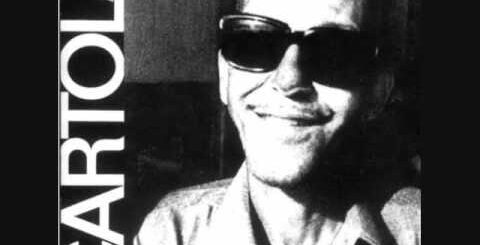
O mundo é um moinho by Cartola Lyrics Meaning – The Grinding Gears of Existence Explored
Lyrics
Mal começaste a conhecer a vida
Já anuncias a hora de partida
Sem saber mesmo o rumo que irás tomar
Preste atenção, querida
Embora eu saiba que estás resolvida
Em cada esquina cai um pouco a tua vida
Em pouco tempo não serás mais o que és
Ouça-me bem, amor
Preste atenção, o mundo é um moinho
Vai triturar teus sonhos, tão mesquinho
Vai reduzir as ilusões a pó
Muita atenção, querida
De cada amor tu herdarás só o cinismo
Quando notares estás à beira do abismo
Abismo que cavaste com os teus pés
Ainda é cedo, amor
Mal começaste a conhecer a vida
Já anuncias a hora de partida
Sem saber mesmo o rumo que irás tomar
Preste atenção, querida
Embora eu saiba que estás resolvida
Em cada esquina cai um pouco a tua vida
Em pouco tempo não serás mais o que és
Ouça-me bem, amor
Preste atenção, o mundo é um moinho
Vai triturar teus sonhos, tão mesquinho
Vai reduzir as ilusões a pó
Muita atenção, querida
De cada amor tu herdarás só o cinismo
Quando notares estás à beira do abismo
Abismo que cavaste com os teus pés
The poignant strains of ‘O mundo é um moinho,’ one of the most profound pieces from the Brazilian poet-songwriter Cartola, resonate through time as a haunting meditation on the adversities of life and the inevitable passage of youth. More than just a melody, this ballad, rich in metaphor and melancholy, acts as a lyrical canvas depicting a stark warning against the naivety with which one may approach existence.
Delicately balancing on the edge between gentle caution and the harsh truths of experience, the song is a sirens’ call that life, much like a mill, grinds down dreams into dust. Through his keen artistic sensibility, Cartola crafts a timeless tale of realization and introspection, inviting listeners to peel back the layers of their own lives and face the music of their personal journeys.
A Serenade of Sorrow: Cartola’s Lyrical Lament
Crafted as a ballad tinged with the subtle groans of samba, ‘O mundo é um moinho’ emerges from Cartola’s personal tapestry of hardships and loss. The music, seemingly simple, carries within it the weight of Cartola’s own life experiences, which were marred by poverty, obscurity, and later recognition. It is less a song and more a melodic heart-to-heart from a man well-acquainted with life’s cruel twists.
In its slow, almost dreamlike rhythm, the song wraps around the listener like a cool breeze, carrying tales of tenderness and wisdom hard-won. Cartola’s voice becomes the elder’s whisper, the knowing bard of the Rio de Janeiro streets, sharing his cautionary tales and imparting a valuable lesson encapsulated within the slow burn of melody.
Relentless Rotation: The Song’s Persistent Cycle and Its Significance
The repetition of the verses in ‘O mundo é um moinho’ is no mere musical motif; it signifies the unceasing and sometimes vicious cycle of life’s trials and tribulations. The cyclic structure not only enhances the song’s hypnotic quality but also mirrors the titular mill’s relentless grind, a mechanical metaphor for the way life can repeatedly wear down our dreams and aspirations.
Each refrain becomes a reminder, echoing in the mind long after the song has faded, of the constancy of change and the fickleness of fortune, further deepening the listener’s understanding of the fragility of one’s happiness and the precariousness of a life lived on the edge of hopeful innocence.
Between the Lines: Unearthing the Song’s Hidden Meanings
Undeniably, ‘O mundo é um moinho’ is a personal address, an intimate letter set to music. Yet, behind its soft approach lie hidden layers of cultural and historical context. Cartola’s work is not isolated from the social turmoil of his homeland, his lyrics reflecting not just personal but collective despair, the disillusionment of a people, and the ruthlessness of an era that chewed through the naive and the dreamers alike.
The song’s verses can be seen as both universal and deeply personal. Each listener finds their own abismo (abyss) within the lyrics, a reflection of their own pitfalls and the consequences of choices made. It is a piece that transcends the personal history of its composer, reaching into the shared heart of human experience.
The Haunting Echoes: Memorable Lines That Stay
Cartola’s elegant lyricism is on full display with lines that are as evocative as they are devastating. The masterful ‘Vai triturar teus sonhos, tão mesquinho’ (‘It will crush your dreams, so petty’) reverberates with stark, unadorned truth. The word ‘mesquinho,’ small or petty, suggests a world indifferent to individual dreams, a brutal realization that becomes etched in the listener’s mind.
These lines weave a tapestry of caution, accentuated by Cartola’s soulful and authentic delivery. In just a few words, he captures the entire essence of the song: a relentless and unstoppable force, reducing dreams and illusions to mere dust. It’s this poignant imagery that cements the song’s place in the annals of lyrical genius.
The Timeless Touch: Why Cartola’s Song Still Resonates
Decades after its initial composition, ‘O mundo é um moinho’ retains its potency and relevance. The experiences Cartola poured into the song—his warnings of cynicism and the weariness that comes from witnessing love’s transformation into disappointment—are experiences that echo as loudly today as they did in the heart of Rio’s favelas.
In an era that praises the grind and hustles culture, Cartola’s song emerges as a poignant counter-narrative, a soulful pause in the midst of the frenetic. It teaches us that the mill of the world, while merciless, can be faced with wisdom and resilience. In doing so, it challenges each person to find a path through life without losing themselves to its maelstrom.