Panic Attacks in Paradise by Ashnikko Lyrics Meaning – Unraveling The Darkness Behind The Beats
Lyrics
Everybody says they love me but I’m still broken hearted
They call me Polly Pessimism, I’m a macabre Barbie (I love you)
My boyfriend wants to love me but I won’t let him
I’ve been predisposed to trauma since I was eleven
So I wrote a couple albums to let out some aggression
I hate that I’m so self-deprecating
More comfortable in bad situations
Sucker for a little devastation
And this always happens
Panic attacks in paradise
Piña coladas, I’m terrified
I swear I’m not crying, the sun’s just bright
I’m having the best time of my life
Panic attacks in paradise
Hyperventilating under candy skies
Telling myself that this is fine
I’m having the best time of my life
It’s a big joke, ha ha, I love laughin’
It’s a big hoax, you’re self-help happy
‘Cause I’m okay, I’m pure propane
On an open flame (watch me blow up)
My boyfriend wants to love me but I won’t let him
I’ve been predisposed to trauma since I was eleven
So I wrote a couple albums to let out some aggression
I hate that I’m so self-deprecating
More comfortable in bad situations
Sucker for a little devastation
And this always happens
Panic attacks in paradise
Piña coladas, I’m terrified
I swear I’m not crying, the sun’s just bright
I’m having the best time of my life
Panic attacks in paradise
Hyperventilating under candy skies
Telling myself that this is fine
I’m having the best time of my life
Ashnikko’s ‘Panic Attacks in Paradise’ serves as a beguiling paradox, uniting infectious beats with the raw, unsettling truths of mental health struggles amidst seemingly ideal conditions. The song is a masterful showcase of how contemporary music can transcend mere entertainment, delving deep into the psyche of an individual grappling with internal discord.
The deceptively upbeat tempo and vibrant melody cloak a narrative steeped in personal turmoil, offering listeners a candid glimpse into the artist’s battle with anxiety and the facade of happiness often presented to the world. Here, we dissect the layers within ‘Panic Attacks in Paradise’ to uncover its profound implications on the intersection of mental health and societal expectations.
Dichotomy of Disquiet: A Lively Anthem for the Anxious
The track kicks off with what seems to be the footprints of a party anthem, but swiftly turns the tables as Ashnikko lays bare the truth of her mental state. With references to ruined parties and a perceived negative outlook, ‘Polly Pessimism’ paints her experience with an emotional brush that contrasts starkly against the high-energy backdrop of the music.
This juxtaposition serves as a powerful reminder that appearances can be deceiving, and true human experience, especially that of the artist, can be buried under layers of expectation and projection. It’s a clever musical technique that lures listeners in with its catchy hooks, only to confront them with the sobering realities of Ashnikko’s psyche.
The Macabre & The Manic: Embracing Artistic Extremes
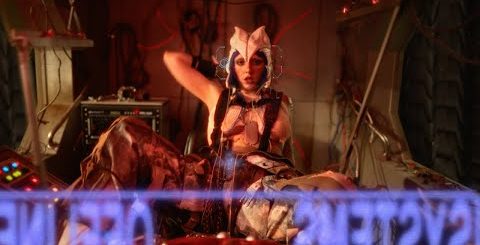
Amid the song’s lively melody, the lyrics drip with macabre imagery, creating a striking balance between the grotesque and the glamorous. Ashnikko describes herself as a ‘macabre Barbie,’ subverting the typically carefree iconography associated with plastic perfection into something far more sinister and complex.
This unorthodox self-characterization is a bold statement reclaiming the artist’s agency in defining her identity. Through this line, Ashnikko imparts a nuanced understanding of femininity that can harbor both darkness and light, questioning the stereotypical expectations of women in music and society.
The Hidden Meaning: Scars Beneath the Surface
Underlying the animated beats and pop-infused rhythm is a heartfelt confession of the pain that persists from childhood trauma. She narrates a personal history fraught with hurt, and music becomes her outlet for releasing pent-up aggression – a cathartic process that allows her to confront and partially alleviate her anguish.
By openly addressing her predisposition to trauma from a young age, Ashnikko adds layers of depth to the narrative. In doing so, she normalizes the dialogue around mental health and the long-term impact of trauma, which often remains shrouded in silence and stigma.
Between the Lyrics: The Struggle of Letting Love In
One of the song’s recurring themes circles around the artist’s difficulty in accepting love. She repeatedly refers to a boyfriend who desires to love her, but she keeps at arm’s length, exhibiting a vulnerability that resonates with many who endure similar battles.
Her disclosure delineates a complex emotional landscape where past hurts inform present interactions, and intimacy becomes besieged by walls erected out of necessity for self-preservation. These lyrics don’t just speak to personal matters; they echo cultural narratives about the challenging road to healing and the role that support systems play in that journey.
The Memorably Paradoxical Lines: Perfectly Imperfect
The chorus of ‘Panic Attacks in Paradise’ captures the oxymoronic essence of the song – finding oneself in a postcard-perfect setting while grappling with overwhelming fear. ‘Piña coladas, I’m terrified’ and ‘Hyperventilating under candy skies’ serve as emotionally charged confessions that are as catchy as they are disheartening.
These lines stay etched in the memory because they encapsulate the dichotomy many face: the pressure to enjoy life’s paradisiacal moments in spite of the chaos within. It is this delicate balance of candid lyricism with relatable experiences that makes ‘Panic Attacks in Paradise’ resonate so powerfully with its audience.