The Real Me by Who Lyrics Meaning – Peeling Back the Layers of Self-Discovery in Classic Rock
Lyrics
To get another shrink
I sit and tell him ’bout my weekend
But he never betrays what he thinks
Woo
Can you see the real me, doctor?
Doctor?
Can you see the real me, doctor?
Woah, doctor
I went back to my mother
I said I’m crazy ma, help me
She said I know how it feels son
‘Cause it runs in the family
Can you see the real me, mama?
Mama?
Can you see the real me, mama?
Woah, mama
Can you see
Can you see the real me?
Can you see
Can you see the real me
The real me
The real me
The cracks between the paving stones
Look like rivers of flowing veins
Strange people who know me
Peeping from behind every window pane
The girl I used to love
Lives in this yellow house
Yesterday she passed me by
She doesn’t want to know me now
Can you see the real me?
Can ya?
Can ya?
Can you see the real me?
Can ya?
Woah, yeah
I ended up with a preacher
Full of lies and hate
I seemed to scare him a little
So he showed me to the golden gate
Can you see the real me, preacher?
Preacher?
Can you see the real me, preacher?
Can you see
Can you see
Can you see
Woah
Can you see the real me, doctor?
Can you see the real me, ma?
Can you see the real me (me, me, me, me, me, me, me, me, me, me, me)?
Unflinchingly raw and ceaselessly energetic, The Who’s ‘The Real Me’ is more than just a raucous track off their celebrated rock opera ‘Quadrophenia’. It’s a testament to self-reflection and the universal search for authentic identity amidst life’s chaotic pageantry. As the bassline throbs and vocals soar, there lies an introspective narrative that challenges listeners to question the facades they present to the world.
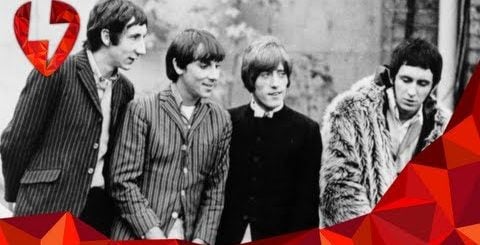
The track is not merely a composition but a conversation, an inquiry into the essence of self. Wrapped in Roger Daltrey’s impassioned delivery, John Entwistle’s dynamic bass, and Pete Townshend’s perceptive lyrics, it’s a song that reaches far beneath the surface to touch on matters of mental health, societal expectations, and the inherent struggle to be seen for who one truly is.
Through the Psychiatrist’s Gaze: A Quest for Clarity
Starting with a visit to the doctor, The Who immediately plunge listeners into a scene fraught with existential frustration. ‘I went back to the doctor / To get another shrink’, sings Daltrey, conveying a sense of being on a relentless and tiresome journey to find someone, anyone, who can understand the protagonist’s inner turmoil.
The plea, ‘Can you see the real me, doctor?’ echoes the agonizing hidden plea behind many a forced smile and well-rehearsed facade. It’s a powerful declaration of the yearning to strip away the layers of pretense and reveal the vulnerable self known only in solitude.
The Maternal Mirror: Reflections of Inherited Pain
In the stark confessionary lines to the mother, the lyrics delve deeper, hinting at genetic or familial threads of mental anguish. ‘She said I know how it feels son / ‘Cause it runs in the family’ speaks to the intergenerational transmission of pain, blurring the lines between individual suffering and collective familial experience.
The question repeated to the mother, ‘Can you see the real me, mama?’, takes on a deeper significance. It’s not just a person trying to be understood by another; it’s a child seeking acknowledgment of their true self from the very person who, in part, defined it.
Architectural Anxiety and Urban Isolation
The imagery of ‘The cracks between the paving stones / Look like rivers of flowing veins’ catapults the song into a cityscape that mirrors internal fissures. The external world, in all its indifferent vastness, becomes a metaphor for inner fragmentation, causing strange, alien feelings even among familiar settings and faces.
The mention of a past love now estranged further compounds this sense of alienation. Once a source of comfort and recognition, the girl in the ‘yellow house’ is yet another person who refuses, or is unable, to see the protagonist’s real self, amplifying the sensation of being invisible even to those closest to him.
The Preacher and the Pretense of Piety
When confronted with hypocrisy, the song veers towards the religious sphere, presenting a preacher ‘Full of lies and hate’. In the face of false moral authority, the protagonist’s identity crisis intensifies, his presence ‘seemed to scare him a little’, possibly because it represents a mirror to the preacher’s own concealed disharmony.
The theme of visibility persists as the spiritual guide ‘showed me to the golden gate’, a symbolic representation of a false promise—of heaven, of resolution—even in a place that should epitomize truth and sanctity. The call ‘Can you see the real me, preacher?’ resonates with disillusionment, questioning the very foundation of truth and recognition in societal structures.
The Siren Call of Memorable Lines: Echoes of Our Own Queries
While The Who’s music has always had an electric presence, it is the universality and hook of lines like ‘Can you see the real me?’ that cements ‘The Real Me’ as a classic. Not only are the words catchy, but they perennially resonate with audiences grappling with their own identities and the desire to be understood.
The perpetual repetition throughout the song is a testament to the persistence of the human spirit in its quest to break through the facades of societal norms and personal fears. Like the best of lyric poetry, it is a mantra for self-inquiry and the honesty that comes from understanding oneself and being understood by others.