The Predatory Wasp of the Palisades Is Out to Get Us! by Sufjan Stevens Lyrics Meaning – Unraveling the Enigmatic Tapestry of Memory and Friendship
- Music Video
- Lyrics
-
Song Meaning
- Wrestling with Layers of Metaphor and Symbolism
- Understanding the Haunting Refrain: ‘We Were in Love,’ a Cloaked Confession?
- Moments of Spirited Melancholy: The Song’s Instrumental Storytelling
- The Sting of Memory: Unpacking the Song’s Hidden Meanings
- An Anthem for the Ages: Memorable Lines Etched in Our Consciousness
Lyrics
I hide in my bed with the lights on the floor
Wearing three layers of coats and leg warmers
I see my own breath on the face of the door
Oh I am not quite sleeping
Oh I am fast in bed
There on the wall in the bedroom creeping
I see a wasp with her wings outstretched
North of Sylvanna we swim in the Palisades
I come out wearing my brothers red hat
There on his shoulder my best friend is bit seven times
He runs washing his face in his hands
Oh how I meant to tease him
Oh how I meant no harm
Touching his back with my hand I kiss him
I see the wasp on the length of my arm
Oh great sights upon this state, hallelu
Wonders bright, and rivers, lake, hallelu
Trail of tears and Horseshoe Lake, hallelu
Trusting things beyond mistake, hallelu
We were in love, we were in love
Palisades, Palisades
I can wait I can wait
We were in love, we were in love
Palisades, Palisades
I can wait I can wait
We were in love, we were in love
Palisades, Palisades
I can wait I can wait
I can’t explain the state that I’m in
The state of my heart, he was my best friend
Into the car, from the back seat
Oh admiration in falling asleep
All of my powers, day after day
I can tell you, we swaggered and swayed
Deep in the tower, the prairies below
I can tell you, the telling gets old
Terrible sting and terrible storm
I can tell you the day we were born
My friend is gone, he ran away
I can tell you, I love him each day
Though we have sparred, wrestled and raged
I can tell you I love him each day
Terrible sting, terrible storm
I can tell you
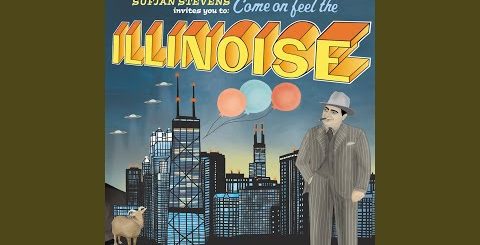
As the gentle plucking of a banjo intertwines with the melodic lament of a flute, Sufjan Stevens’s ‘The Predatory Wasp of the Palisades Is Out to Get Us!’ taps into an elegiac reservoir of childhood memory, friendship, and the stings of growing up. On the surface, the track from his critically acclaimed 2005 album ‘Illinois’ captures an idyllic snapshot of youth, but the tendrils of nostalgia grip the listener, drawing them into a bittersweet reverie.
Through poetic lyricism and aching melodies, Stevens crafts a vivid narrative that appears to transcend time and place, stirring the soul with its universality. At the heart of this ballad is a tale of love—platonic, intense, and perhaps, unspoken—intertwined with the visceral imagery of the predatory wasp, an emblem of the pain and transformation inherent in personal growth.
Wrestling with Layers of Metaphor and Symbolism
Stevens is no stranger to utilizing metaphor to deliver poignant messages, and the titular wasp is a prime example. The wasp, with its painful sting, becomes a metaphor for the pangs of young love and the inevitable hurts of adolescence. It is both literal and figurative—it haunts the bedroom, a place of rest and vulnerability, and also pricks the skin, marking the body as if to echo the indelible marks left on our psyche by formative experiences.
It isn’t just the wasp that bears symbolic weight—the act of swimming in the Palisades and wearing a brother’s red hat are colored with layers of innocence and the passage into adulthood. Each object, each location, resonates with a deeper meaning, creating a narrative that is at once intimately detailed and expansively allegorical.
Understanding the Haunting Refrain: ‘We Were in Love,’ a Cloaked Confession?
Amidst the fluidity of the song’s narrative, the haunting refrain ‘We were in love’ reverberates like a heartbeat. It is a delicate admission, one Stevens layers with ambiguity. Is this a tale of romantic love left unspoken, or the profound bond between friends that borders the ineffable? The repetition serves as an incantation, as if to call forth the past, or perhaps to acknowledge a love that was never fully realized.
This refrain anchors the song, transforming what could easily be seen as a nostalgia piece into something more reminiscent of a confessional hymn. It pays homage to that all-consuming nature of young relationships, full of intensity and longing, yet often confined to the silence between words—a space where the truest feelings often reside.
Moments of Spirited Melancholy: The Song’s Instrumental Storytelling
Stevens is a master at conjuring emotion through his arrangements, and in ‘The Predatory Wasp…’, the music swells and fades in a dance with the lyricism. The intertwining orchestrations mirror the complex interplay of memory and present sensation, each note a brushstroke adding color to a canvas rich with fragile reminiscences.
The orchestral elements rise in a crescendo akin to the overpowering wave of nostalgia that can accompany the act of reminiscence. They peak at moments of revelation and recede with the subtlety of unresolved tensions or unspoken declarations, mimicking the ebb and flow of life’s unresolved narratives.
The Sting of Memory: Unpacking the Song’s Hidden Meanings
Stevens’s clever wordplay and intricate storytelling create a multi-dimensional tapestry. Lines like ‘Terrible sting and terrible storm’ and ‘I can tell you, I love him each day’ speak to the tumultuous nature of youth, marked with its joys and traumas. A terrible sting can be a physical event, the end of a relationship, or a pivotal moment of change—it’s a phrase with as many interpretations as listeners.
The hidden meanings in ‘The Predatory Wasp…’ lie in its ability to make the personal universal. With every verse, Stevens invites the listener to substitute their own memories and loves into the narrative, ensuring that the song’s emotional resonance is as varied as its audience is diverse.
An Anthem for the Ages: Memorable Lines Etched in Our Consciousness
Certain lines from the song possess a lyrical staying power that etches them into our consciousness. ‘My friend is gone, he ran away / I can tell you, I love him each day’ speaks to the heart of the song’s emotional core, capturing the essence of loss, longing, and love in its purest form.
Regarding the song’s memorability, it isn’t just the lines themselves—it’s the way Stevens delivers them with a voice drenched in sincerity and vulnerability. This is the kind of song that becomes a perennial favorite, serving as a totem for those moments when we find ourselves caught between the past and the present.